The first part of the civics test is about the ideas on which the United States is built. The officer asks short questions with short answers: what the Constitution is, what the Declaration of Independence says, what “rule of law” means. You only need to give the answer that the official USCIS list gives.
Read the sections below one by one. The key words in the lists are the ones used in the questions and in the answers.
Part 1 of 4
The Declaration of Independence
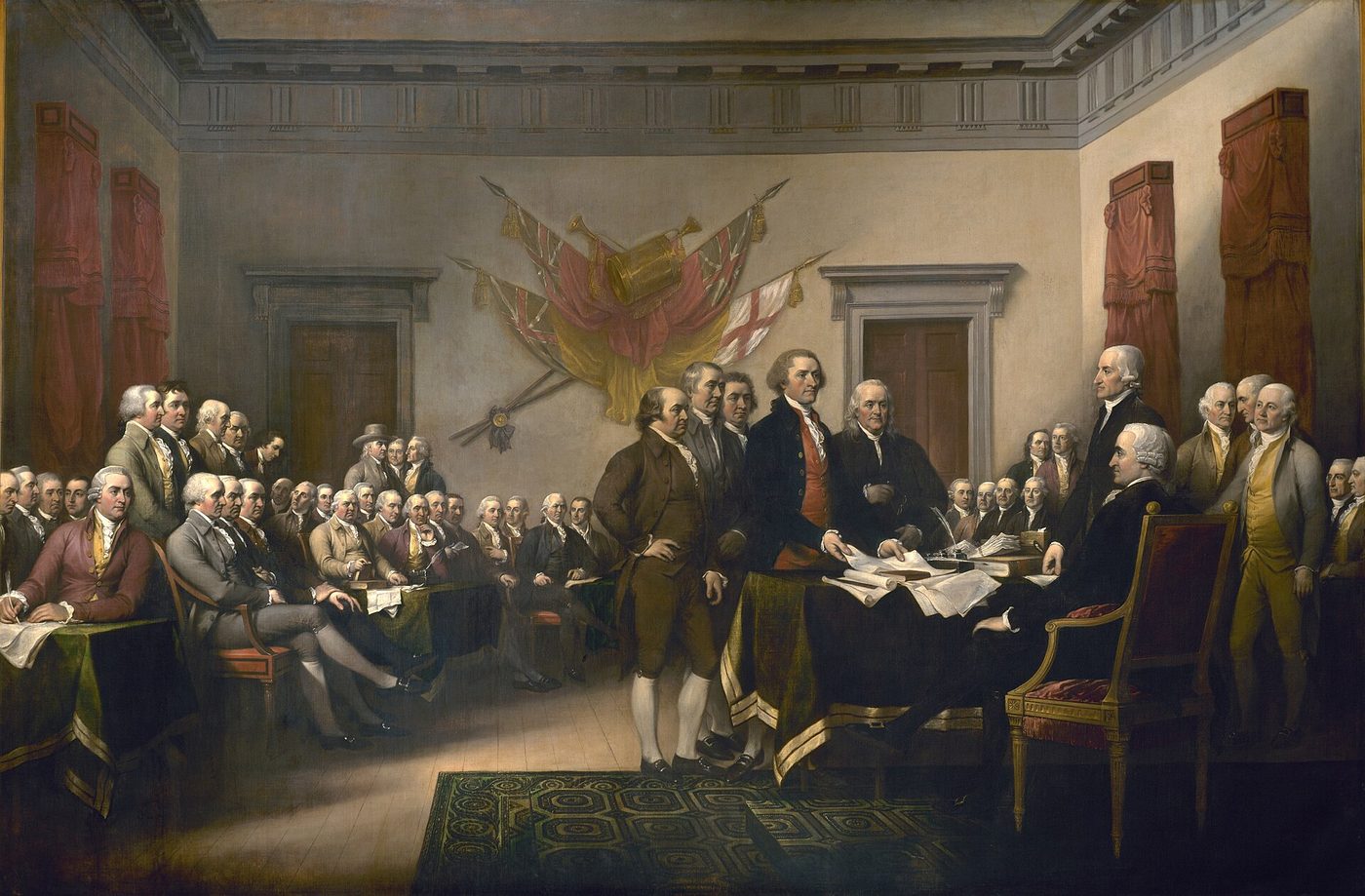
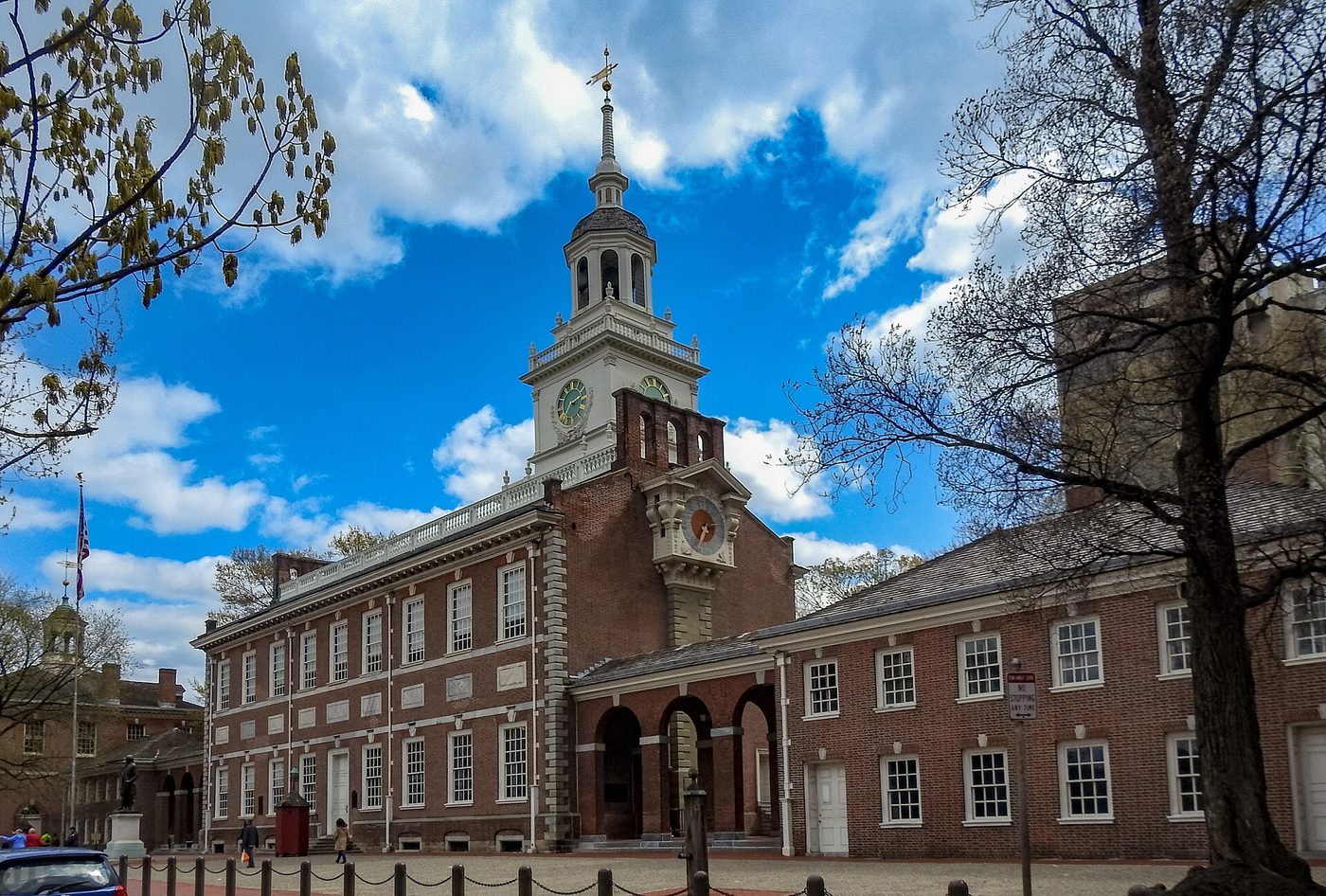
The Declaration of Independence was adopted on 4 July 1776 in Philadelphia. It told the world that the thirteen colonies were free from Great Britain.
Thomas Jefferson wrote the Declaration. It says that all people are created equal and have rights that cannot be taken away: life, liberty and the pursuit of happiness.
It says that governments get their power from the consent of the governed, the people, and that the people can change a government that does not protect their rights.
The Declaration lists complaints against the British king, such as taxes without representation and British soldiers living in people’s homes.
The United States celebrates Independence Day on 4 July. The Declaration was signed by 56 delegates, and the first to sign was John Hancock.
Exam tip: If the officer asks “what did the Declaration of Independence do?”, say: it announced our independence from Great Britain.
Key words you will meet in the questions
Declaration of Independence
the 1776 document that announced independence
colony
a territory ruled by another country
liberty
freedom
consent of the governed
the people agree to be governed
equal
having the same rights
Part 2 of 4
The Constitution
The Constitution is the supreme law of the land. It was written in 1787 at the Constitutional Convention in Philadelphia, and it started with the words “We the People”.
The Constitution sets up the government, defines the powers of the government and protects the basic rights of Americans.
It has an introduction (the Preamble), seven articles and 27 amendments. An amendment is a change or an addition to the Constitution.
The first ten amendments are called the Bill of Rights. They were added in 1791 and protect the rights of individuals, such as free speech.
The Founding Fathers wrote the Constitution; James Madison is often called the “Father of the Constitution”. Many people helped, and Benjamin Franklin was the oldest delegate.
A change to the Constitution needs a very large majority in Congress and the approval of the states, so it is rare.
Key words you will meet in the questions
Constitution
the supreme law of the United States
amendment
a change or addition to the Constitution
Bill of Rights
the first ten amendments
Preamble
the introduction to the Constitution
Founding Fathers
the leaders who created the United States
Part 3 of 4
Rule of law, separation of powers and self-government
Several big ideas are behind the American system. The test asks you to name them and to explain them in one sentence.
Rule of law: everyone must follow the law, including leaders and the government; no person is above the law.
Separation of powers: the government is divided into three branches: legislative (Congress makes the laws), executive (the president carries them out) and judicial (the courts explain them).
Checks and balances: each branch can limit the power of the others, so that no branch becomes too strong; for example, the president can veto a law, and Congress can override the veto.
The United States is a republic and a representative democracy: the people elect representatives who make decisions for them. Power comes from “We the People”.
Federalism: power is shared between the federal government and the state governments. The Constitution is the supreme law, above state laws.
Exam tip: Three branches, three words: Congress makes, the president carries out, the courts explain.
Key words you will meet in the questions
rule of law
everybody must obey the law
branches of government
legislative, executive and judicial
checks and balances
each branch limits the others
republic
a country where the people elect leaders
federal
of the national government
Part 4 of 4
The economic system and taxes
The test also asks a few questions about the economy, which is a free-market (capitalist) system.
The United States has a capitalist economy, also called a free market economy or market economy: businesses and people are free to own property, make products and compete.
People own private property and can start businesses, and the government regulates parts of the economy.
Taxes pay for what the government does: schools, roads, the army and many services. Americans file a tax return each year with the IRS (Internal Revenue Service), and the usual deadline is 15 April.
The dollar is the currency, and the Constitution gives Congress the power to collect taxes and to coin money.
Key words you will meet in the questions
capitalist economy
an economy based on private ownership and competition
free market
prices set by supply and demand
tax
money paid to the government
IRS
the federal tax agency
private property
things owned by a person
Remember for the exam
Declaration of Independence: 4 July 1776, written by Jefferson; it announced independence from Great Britain.
The Constitution is the supreme law; 27 amendments; the Bill of Rights is the first ten.
Rule of law, separation of powers, checks and balances, republic, federalism.
Free-market (capitalist) economy; taxes go to the IRS.
Now practise this topic
Reading is the first step. Questions show you what you already know.
Study the questions on this topic
Every question of the bank on this topic, with its answer. Check yourself and mark what you do not know yet.