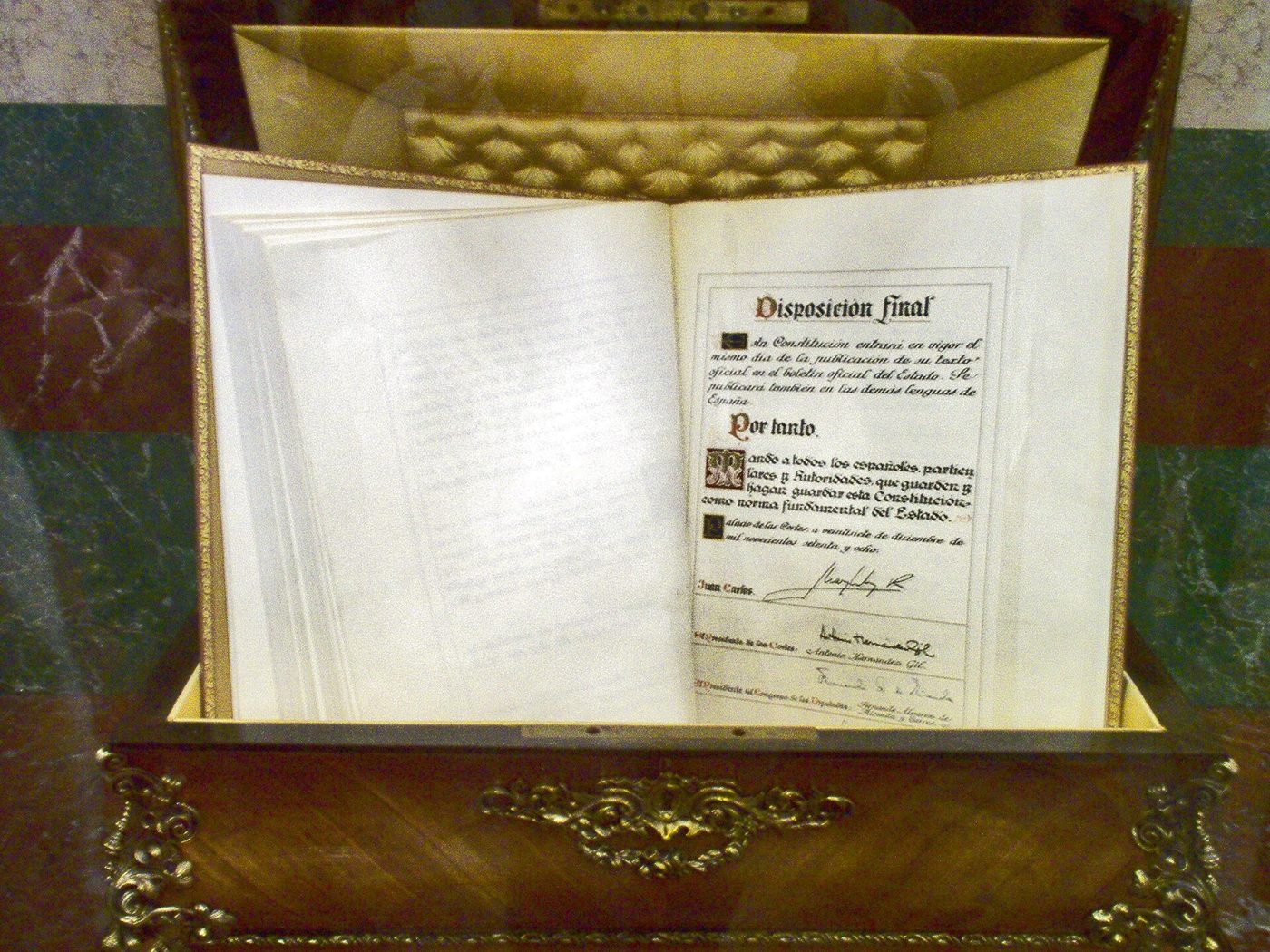
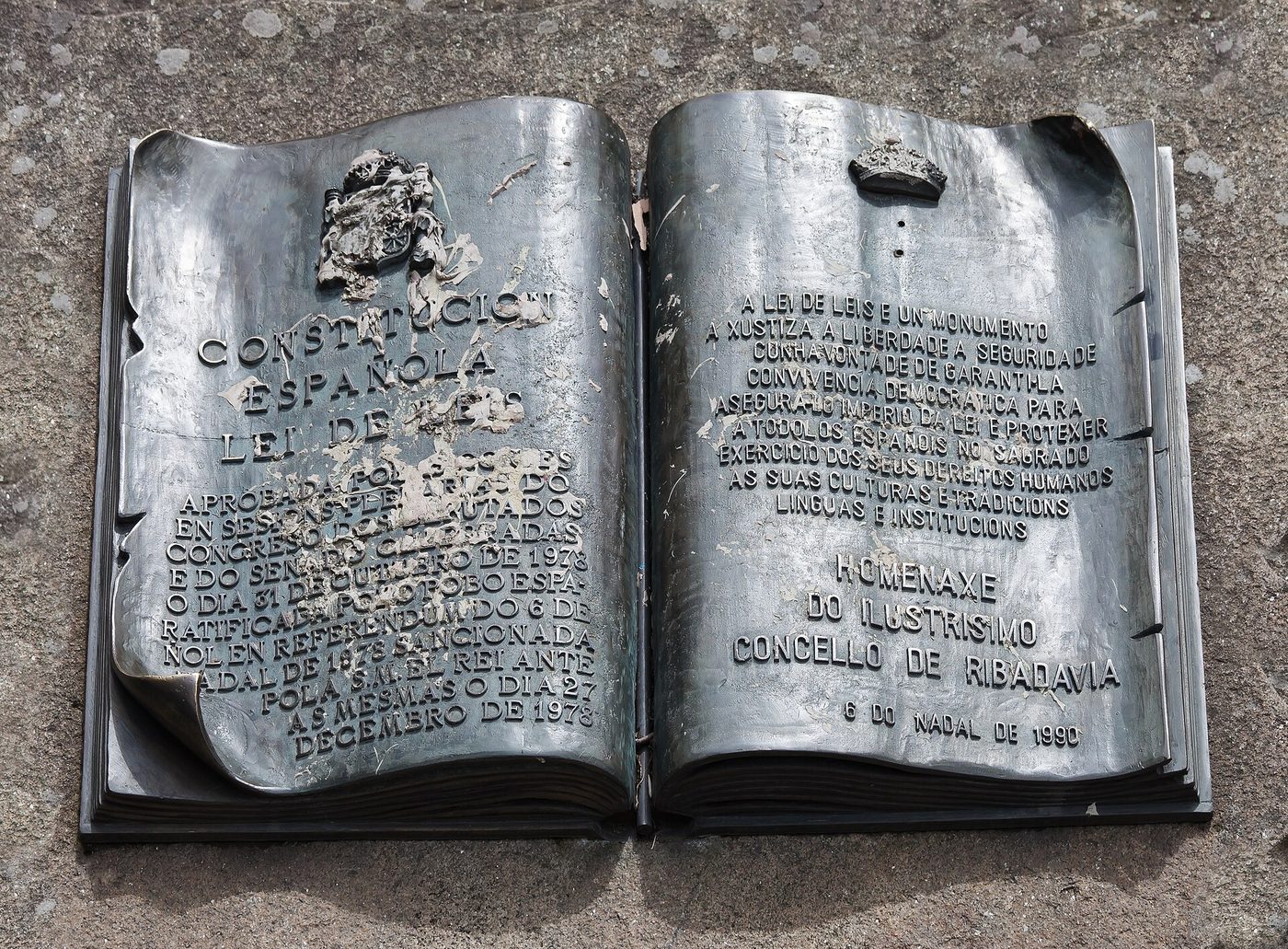
The Constitution (La Constitución española) is the highest law of Spain. Every other law, and every public institution, has to follow it. The CCSE starts from it: the first questions of the test ask when it was approved, what values it protects and how the State is organised.
You do not need to learn the articles by heart. Learn the main dates, the first articles and the big ideas: a democratic State, the sovereignty of the people, a parliamentary monarchy and the right to autonomy of the regions.
Part 1 of 4
From dictatorship to democracy
Spain lived under the dictatorship of General Franco from 1939 until he died on 20 November 1975. The years that followed are called the Transition (la Transición).
King Juan Carlos I became head of State in 1975 and supported the change to democracy.
On 15 June 1977 the first free general elections were held, after more than forty years. The new Cortes had the task of writing a constitution.
The Cortes approved the Constitution on 31 October 1978. The Spanish people voted for it in a referendum on 6 December 1978, and it came into force when it was published in the official gazette (BOE) on 29 December 1978.
6 December is a national holiday: Constitution Day (Día de la Constitución).
Exam tip: The test often asks for the year: the current Constitution is from 1978.
Key words you will meet in the questions
la Transición
the Transition to democracy
dictadura
dictatorship
referéndum
referendum
Día de la Constitución
Constitution Day, 6 December
BOE
the official gazette (Boletín Oficial del Estado)
Part 2 of 4
The State and its values
Article 1 sums up the idea of the Spanish State. Spain is a social and democratic State governed by law, and it protects four highest values.
The four highest values are liberty (libertad), justice (justicia), equality (igualdad) and political pluralism (pluralismo político).
National sovereignty belongs to the Spanish people, from whom all the powers of the State come (Article 1.2).
The political form of the State is the parliamentary monarchy (monarquía parlamentaria): the King is the head of State, but the people elect parliament and the Government is accountable to it.
Spain is a single nation (Article 2) with a right to autonomy of its nationalities and regions. The capital is Madrid (Article 5).
Equality: all Spaniards are equal before the law, with no discrimination because of birth, race, sex, religion, opinion or any other personal circumstance (Article 14).
Key words you will meet in the questions
Estado social y democrático de Derecho
a social and democratic State governed by law
soberanía nacional
national sovereignty
monarquía parlamentaria
parliamentary monarchy
pluralismo político
political pluralism
igualdad
equality
Part 3 of 4
How the Constitution is organised
The Constitution is a long text with 169 articles, a preliminary title and ten titles, plus additional, transitional and final provisions.
The Preliminary Title sets out the basics: the State, sovereignty, unity and autonomy, the languages, the flag and the capital.
Title I is about fundamental rights and duties, one of the most important parts for the test (see the guide on rights).
Later titles describe the Crown, the Cortes Generales, the Government, the judiciary, the territorial organisation, the Constitutional Court and the way to reform the Constitution.
Castilian (Spanish) is the official language of the State, and every Spaniard has the duty to know it and the right to use it. The other Spanish languages are also official in their communities (Article 3).
The flag is made of three horizontal stripes: red, yellow and red, the yellow one being twice as wide (Article 4).
Key words you will meet in the questions
artículo
article
título
title (a main part of the Constitution)
lengua oficial
official language
bandera
flag
capital
capital city
Part 4 of 4
Changing the Constitution
The Constitution can be changed, but it is not easy: that is meant to protect it. Changes need large majorities in the Cortes and, in important cases, a referendum.
A reform is normally approved by three fifths of each chamber (Congress and Senate). If the change is to the most protected parts, the Cortes are dissolved, a new Cortes approves it by two thirds and the people vote in a referendum.
The Constitution has been reformed only a few times: in 1992 (so that EU citizens could be elected in municipal elections), in 2011 (budget stability) and in 2024 (the wording on persons with disabilities).
The Constitutional Court (Tribunal Constitucional) checks that laws respect the Constitution and protects fundamental rights through the appeal for protection (recurso de amparo).
Everybody, citizens and public authorities alike, must obey the Constitution and the law (Article 9).
Key words you will meet in the questions
reforma constitucional
constitutional reform
Tribunal Constitucional
Constitutional Court
recurso de amparo
appeal for protection of fundamental rights
mayoría
majority
Remember for the exam
The current Constitution was approved in 1978 (referendum on 6 December); Constitution Day is 6 December.
Spain is a social and democratic State governed by law; the highest values are liberty, justice, equality and political pluralism.
Sovereignty belongs to the people; the form of the State is the parliamentary monarchy; the capital is Madrid.
Spanish (castellano) is the official language; the other languages are co-official in their communities.
The Constitution is hard to change; the Constitutional Court protects it.
Now practise this topic
Reading is the first step. Questions show you what you already know.
Study the questions on this topic
Every question of the bank on this topic, with its answer. Check yourself and mark what you do not know yet.