Title I of the Constitution lists the fundamental rights and duties of the people who live in Spain. It is one of the biggest parts of the CCSE, because it is about daily life: what you are free to do, what the State must guarantee and what you owe in return.
Read the sections below one by one. Each ends with the Spanish words you will see in the questions.
Part 1 of 5
Fundamental rights and freedoms
The Constitution protects a long list of rights. The most important ones are explained in plain words below.
Equality before the law, and the right to life and to physical and moral integrity. The death penalty is abolished and nobody may be tortured.
Freedom of ideology, religion and belief. Nobody has to say what they believe, and no religion is the religion of the State.
Freedom of expression and information, and the right to honour, privacy and the secrecy of communications. Your home cannot be entered without your permission or a judge’s order.
Freedom of assembly and demonstration, freedom of association (parties, unions, clubs), the right to strike and to join a union.
The right to education, with free and compulsory basic education; the right to work and to a fair wage; the right to a fair trial and to a lawyer; and the presumption of innocence.
Exam tip: If a question describes something that treats people differently because of religion, sex or origin, it goes against Article 14.
Key words you will meet in the questions
derechos fundamentales
fundamental rights
libertad de expresión
freedom of expression
libertad religiosa
religious freedom
derecho de huelga
the right to strike
presunción de inocencia
presumption of innocence
Part 2 of 5
Duties of everyone
With rights come duties. The Constitution names the main ones, and they apply to everybody who lives in Spain.
Everybody has the duty to obey the Constitution and the law.
Everybody must pay taxes according to their income, so that public services such as schools and hospitals can be paid for (Article 31).
Spaniards have the right and the duty to defend Spain. Compulsory military service was abolished in 2001, and today the armed forces are professional.
Parents have the duty to make their children go to school during compulsory education.
Public authorities may not abuse their power: they too must follow the law and cannot act arbitrarily.
Key words you will meet in the questions
deberes
duties
impuestos
taxes
servicio militar
military service
ciudadano
citizen
Part 3 of 5
Taking part: voting and elections
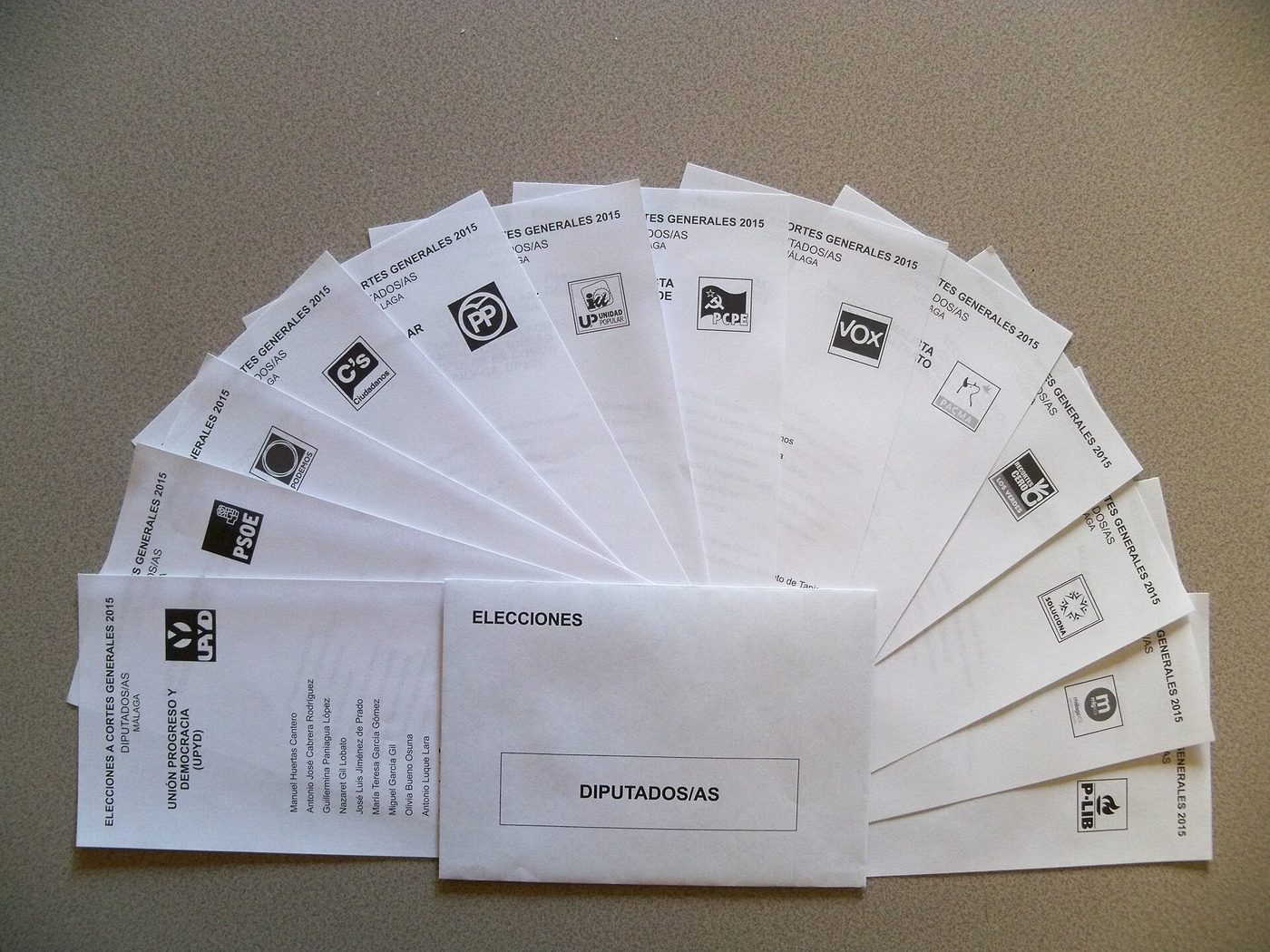
In a democracy, citizens take part in public affairs, above all by voting. Spain has free elections with universal suffrage.
The vote is universal (all adults), equal, free, direct and secret. You can vote from the age of 18.
General elections (elecciones generales) choose the Congress of Deputies and the Senate, normally every four years. Regional, municipal and European elections are held too.
The system is proportional: the number of seats of each party follows the number of votes it receives. The government is formed by the party, or the parties, that can win the confidence of the Congress.
Voting is a right, not a legal duty. Citizens can also take part by joining a party or a union, by signing a popular legislative initiative or by contacting their representatives.
Foreigners cannot vote in general elections. Citizens of the European Union who live in Spain can vote in municipal and European elections, and some foreign residents can vote in municipal elections under agreements with their countries.
Exam tip: Remember: at least 18 years old, secret ballot, every four years for the general elections.
Key words you will meet in the questions
elecciones
elections
voto
vote
sufragio universal
universal suffrage
papeleta
ballot paper
mesa electoral
polling station table
Part 4 of 5
How rights are protected
A right is only worth something if it can be defended. In Spain there are several ways to do that.
Ordinary judges and courts protect rights: anyone can go to court, and the Constitution guarantees effective judicial protection (tutela judicial efectiva).
The Constitutional Court can hear an appeal for protection (recurso de amparo) when a fundamental right has been violated and the ordinary courts did not repair it.
The Ombudsman (Defensor del Pueblo) is chosen by the Cortes and defends the rights of everybody against the Administration. Anyone can complain to him for free.
The police and security forces must respect the law: a detained person has the right to remain silent, to be told why they are detained and to be helped by a lawyer. Nobody may be held more than 72 hours without a judge.
Key words you will meet in the questions
Defensor del Pueblo
Ombudsman
tribunal
court
abogado
lawyer
detención
detention
Part 5 of 5
Foreigners and nationality
People from other countries who live in Spain have rights too, and there are several ways to become Spanish.
Foreigners enjoy the basic rights of the Constitution under the conditions of the law and treaties, for example to health care, education and legal protection.
To live in Spain you need an identity document for foreigners: the NIE is your foreigner’s identity number, and the TIE is the residence card.
Spanish nationality can be acquired by residence. The usual period is ten years of legal residence; it is shorter (two years) for nationals of Ibero-American countries, Andorra, the Philippines, Equatorial Guinea or Portugal, and for Sephardic Jews; and one year in some cases, such as marriage to a Spaniard or birth in Spain.
Most applicants must also pass the CCSE (this test) and a Spanish language test (DELE A2), unless they are exempt.
Key words you will meet in the questions
nacionalidad española
Spanish nationality
residencia legal
legal residence
NIE
foreigner’s identity number
extranjero
foreigner
Remember for the exam
Title I lists the fundamental rights: equality, life, religious and ideological freedom, expression, assembly, association, education, a fair trial.
Everybody must obey the law and pay taxes; compulsory military service no longer exists.
You can vote from 18; the vote is secret; the general elections are normally every four years.
The Defensor del Pueblo and the Constitutional Court (recurso de amparo) protect rights.
Nationality by residence normally takes ten years, and two for some nationalities; the CCSE and DELE A2 are usually required.
Now practise this topic
Reading is the first step. Questions show you what you already know.
Study the questions on this topic
Every question of the bank on this topic, with its answer. Check yourself and mark what you do not know yet.