The CCSE does not ask for long stories. It asks for the key moments of Spanish history and the dates that go with them: who lived in Spain, when the Moors arrived, what happened in 1492, when the Civil War was and when democracy came back.
Read the guide in order: it follows a timeline, from the oldest times to the present.
Part 1 of 4
Early peoples and Roman Hispania
People lived in the Iberian Peninsula for a very long time before Spain existed. The cave paintings of Altamira, in Cantabria, are some of the best known from prehistory.
Before the Romans, the peninsula was home to Iberians, Celts and Celtiberians. Phoenicians, Greeks and Carthaginians founded colonies on the coast, for example Cádiz (Gades).
The Romans arrived in 218 BC and called the land Hispania. They stayed for about six centuries and left roads, bridges, aqueducts, theatres, the Latin language and Roman law. Mérida, Segovia and Tarragona keep important Roman remains.
Spanish, Catalan, Galician and Portuguese all come from Latin. Christianity spread during the Roman period.
When the Roman Empire fell, the Visigoths, a Germanic people, ruled Hispania from the 5th century, with their capital in Toledo.
Key words you will meet in the questions
Hispania
the Roman name of the peninsula
romanos
Romans
visigodos
Visigoths
acueducto
aqueduct
Altamira
the famous prehistoric cave paintings
Part 2 of 4
Al-Andalus and the Reconquista
In the year 711 Muslim armies from North Africa crossed the Strait of Gibraltar and in a few years took most of the peninsula. The Muslim territory was called Al-Andalus.
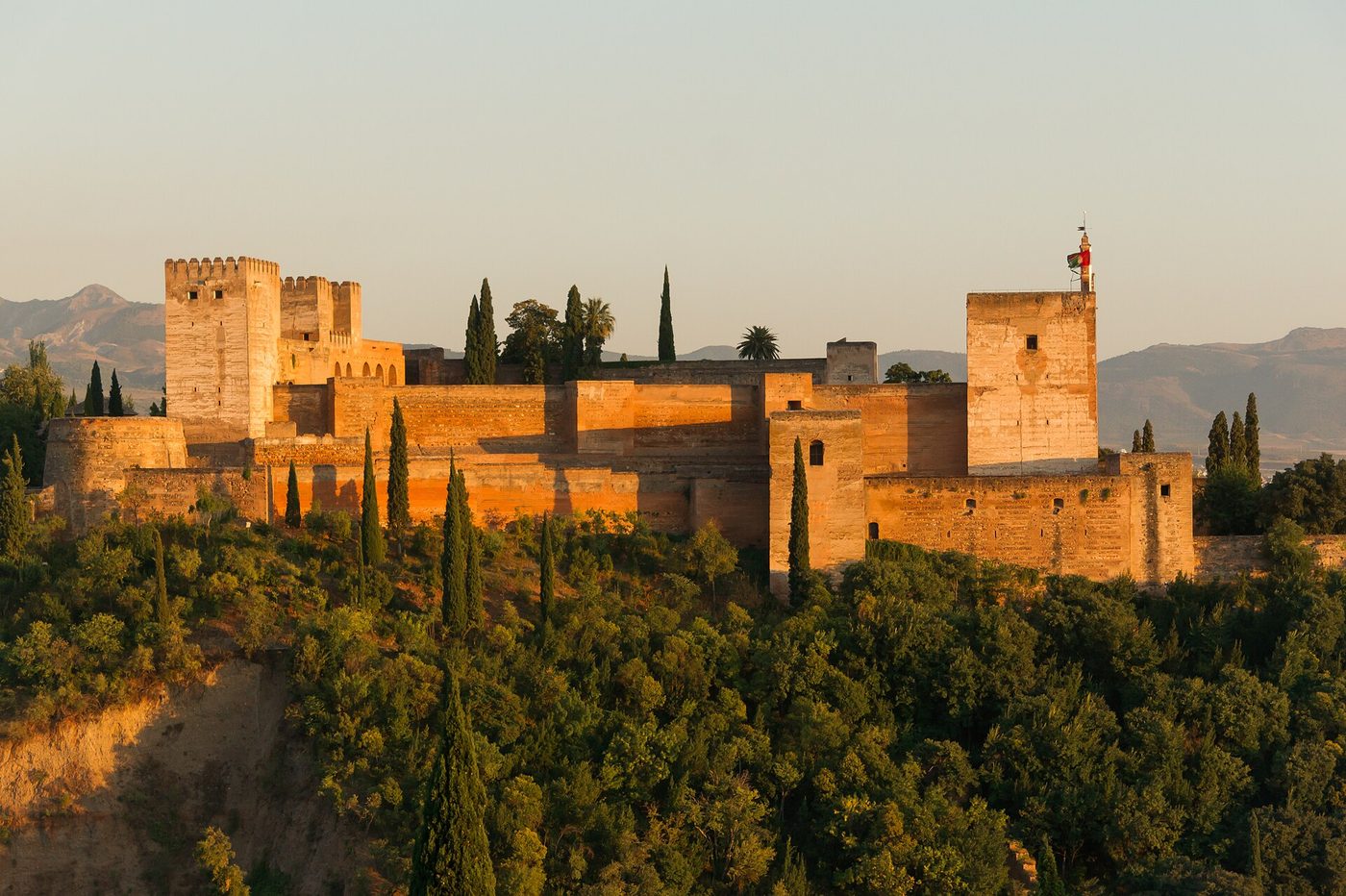
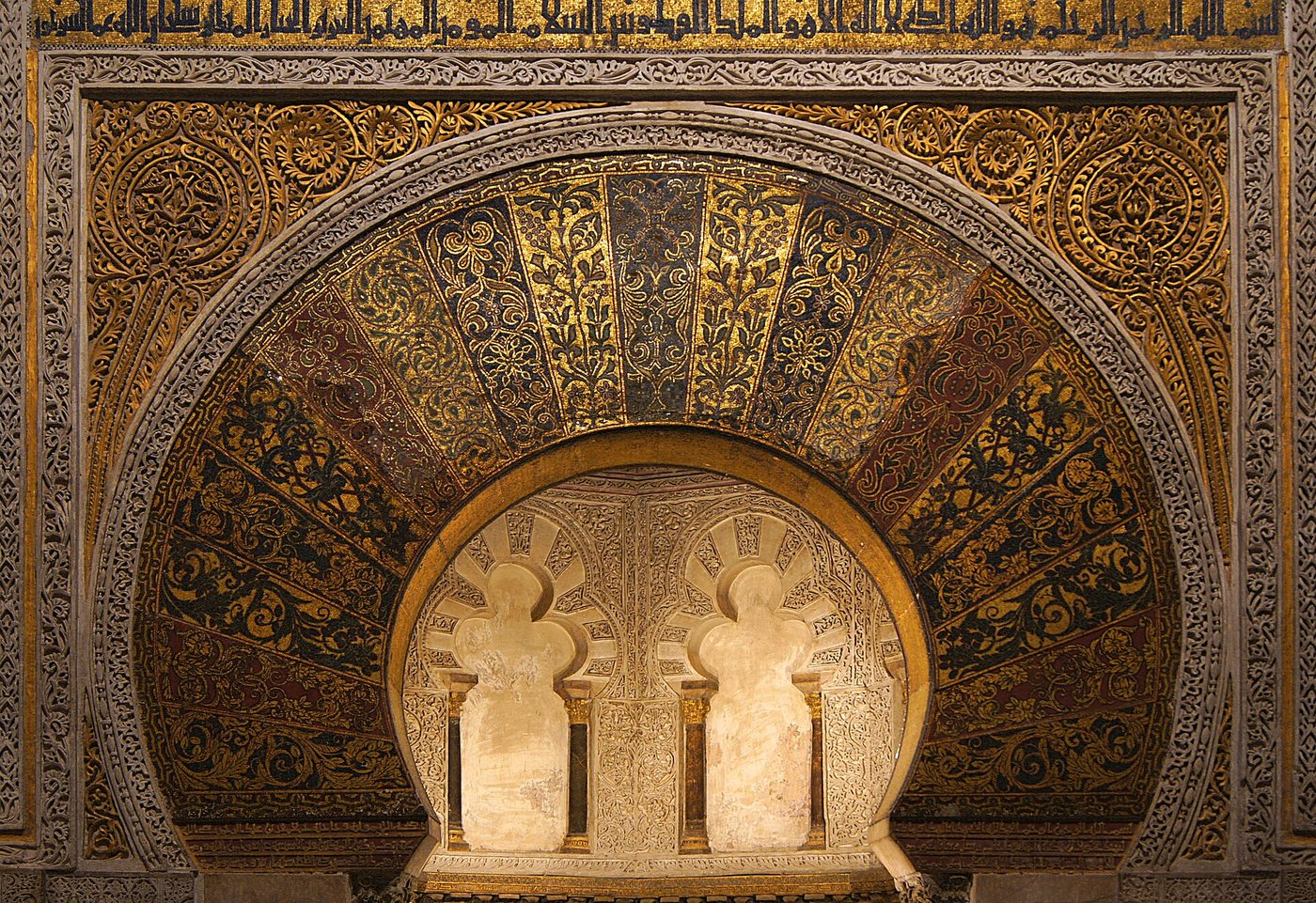
Córdoba became one of the greatest cities of Europe, with the Mosque of Córdoba, libraries and scholars. Later Granada was the last Muslim kingdom, with the Alhambra palace.
Muslims, Christians and Jews lived together in Al-Andalus for centuries and exchanged knowledge in science, medicine, agriculture and architecture. Many Spanish words come from Arabic, for example aceite, azúcar and almohada.
In the north, Christian kingdoms (Asturias, León, Castilla, Navarra, Aragón) slowly advanced south. This long process is called the Reconquista (reconquest).
The Reconquista ended on 2 January 1492, when the Catholic Monarchs, Isabella I of Castilla and Ferdinand II of Aragón, took Granada.
The marriage of the Catholic Monarchs joined the crowns of Castilla and Aragón and is the origin of the Spanish monarchy.
Exam tip: The key date to remember is 1492: the fall of Granada and the voyage of Columbus.
Key words you will meet in the questions
Al-Ándalus
Muslim Spain
Reconquista
the Christian reconquest
Reyes Católicos
the Catholic Monarchs
mezquita
mosque
Alhambra
the palace-fortress of Granada
Part 3 of 4
1492 and the Spanish Empire
In 1492 Christopher Columbus, paid by the Catholic Monarchs, reached America. This started a period in which Spain became a world power.
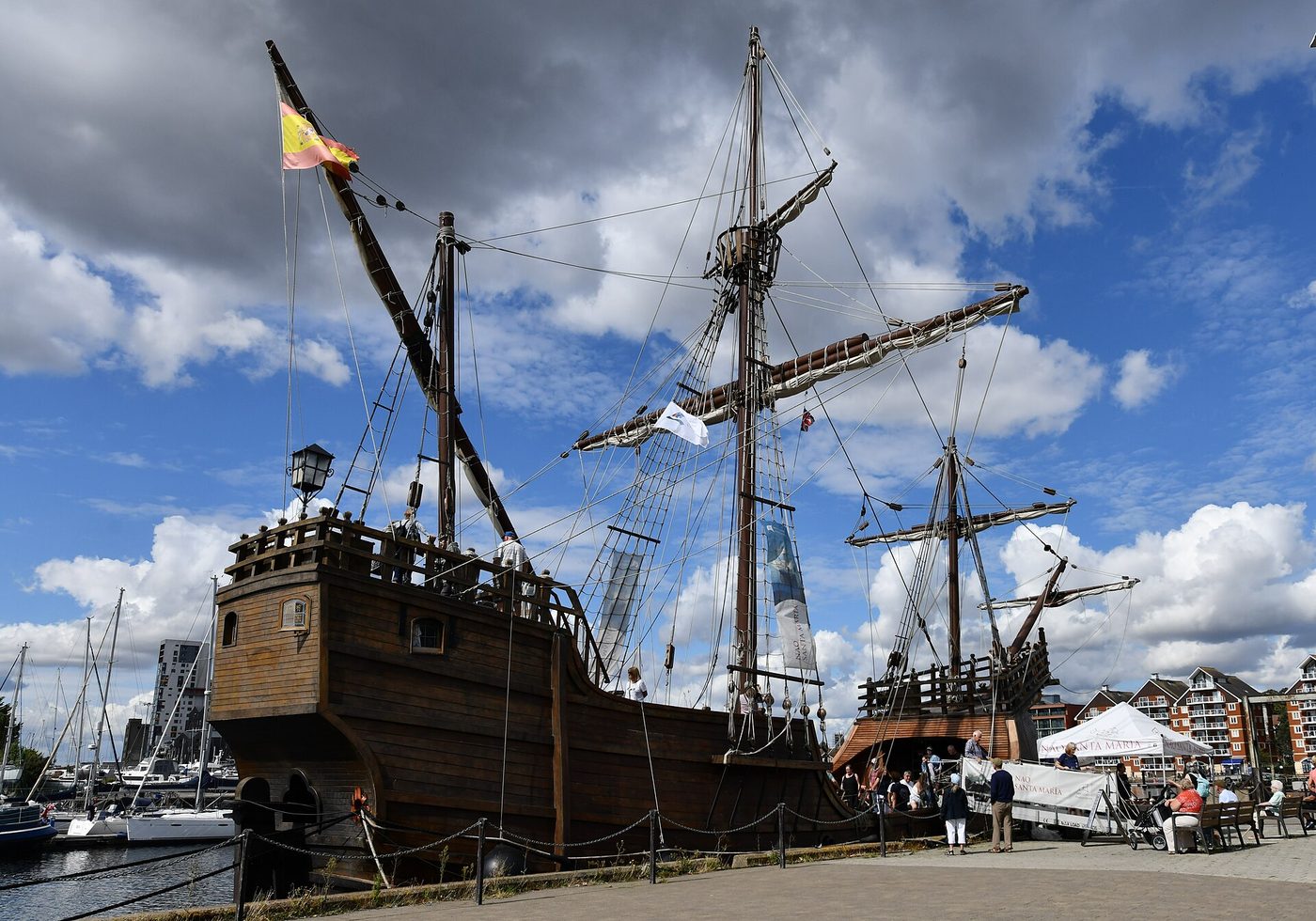
Columbus sailed with three ships: the Pinta, the Niña and the Santa María. He reached an island of the Bahamas on 12 October 1492. 12 October is Spain’s national day (Fiesta Nacional de España).
In the 16th century, under Charles I (Carlos I, also Emperor Charles V) and Philip II (Felipe II), the Spanish Empire spread over a great part of America, the Philippines and Europe. It was said that “the sun never set” on the Spanish Empire.
This was the Golden Age (Siglo de Oro) of Spanish culture: Cervantes wrote Don Quixote, and Velázquez, El Greco and Lope de Vega worked in these years.
Later the empire weakened. In the 18th century the Bourbon dynasty came to the throne, with Philip V; the Bourbons still reign in Spain today.
In the 19th century most of the American colonies became independent, and the country lived through wars, such as the War of Independence against Napoleon (1808–1814), and political instability. The Constitution of Cádiz (1812) was the first liberal constitution.
Key words you will meet in the questions
Cristóbal Colón
Christopher Columbus
descubrimiento de América
the discovery of America
Siglo de Oro
the Golden Age
imperio
empire
Borbones
the Bourbons (the royal family)
Part 4 of 4
Republic, Civil War and Franco
The 20th century was a hard one. Spain went through a republic, a terrible war and a long dictatorship before it became a stable democracy.
The Second Republic was proclaimed on 14 April 1931. It gave the vote to women (1931) and tried to modernise the country.
The Civil War (Guerra Civil) lasted from 1936 to 1939. It began with a military uprising led by General Franco against the Republic, and it ended with Franco’s victory.
Franco ruled as a dictator from 1939 until he died in 1975. There were no free elections or political parties, freedoms were limited and many people went into exile.
After Franco’s death, King Juan Carlos I led the Transition. The Constitution of 1978 started democracy; in 1981 an attempted coup (23-F) failed.
Spain joined NATO in 1982 and the European Economic Community (today the European Union) on 1 January 1986. The euro replaced the peseta in 2002.
Exam tip: Dates that come up often: 1492, 1936–1939, 1975, 1978 and 1986.
Key words you will meet in the questions
Guerra Civil
Civil War (1936–1939)
República
Republic
dictador
dictator
exilio
exile
Unión Europea
European Union
Remember for the exam
Romans (218 BC) made Hispania; Visigoths followed; Muslims arrived in 711 and founded Al-Andalus.
1492: the Catholic Monarchs take Granada and Columbus reaches America; 12 October is the national day.
Golden Age: Cervantes (Don Quixote), Velázquez, Lope de Vega.
Civil War 1936–1939; Franco’s dictatorship 1939–1975; Constitution 1978; European Community 1986.
Now practise this topic
Reading is the first step. Questions show you what you already know.
Study the questions on this topic
Every question of the bank on this topic, with its answer. Check yourself and mark what you do not know yet.