The largest part of the Einbürgerungstest is “Leben in der Demokratie”, living in a democracy. The questions come from the official BAMF catalogue of 300 questions, and many of them have the same logic: power in Germany is limited, divided and always comes from the people.
Learn who elects whom, which institution does what and the German words of the answers, because the test is in German.
Part 1 of 5
The Basic Law (Grundgesetz)
The Basic Law is the constitution of the Federal Republic of Germany. It came into force on 23 May 1949, and it has been the constitution of the whole of Germany since reunification in 1990.
Article 1 opens it: human dignity is inviolable (Die Würde des Menschen ist unantastbar). This is the base of all the other rights.
Article 20 says that Germany is a democratic and social federal state, that all state power comes from the people (Alle Staatsgewalt geht vom Volke aus), and that the state power is divided.
The separation of powers (Gewaltenteilung) divides the state into the legislative power (Parliament, which makes the laws), the executive power (the government and the administration) and the judicial power (the courts).
Some principles can never be changed, even by a large majority (the “eternity clause”, Article 79): human dignity, the democratic, social and federal state, and the right to resist anyone who wants to abolish this order.
Germany is a Rechtsstaat, a state governed by law: everybody, including the state, must follow the law.
Exam tip: “Alle Staatsgewalt geht vom Volke aus” is one of the most useful sentences: many answers are “das Volk”, never an institution.
Key words you will meet in the questions
das Grundgesetz
the Basic Law, the constitution
die Menschenwürde
human dignity
die Gewaltenteilung
the separation of powers
der Rechtsstaat
a state governed by law
die Staatsgewalt
state power
Part 2 of 5
Elections and the Bundestag
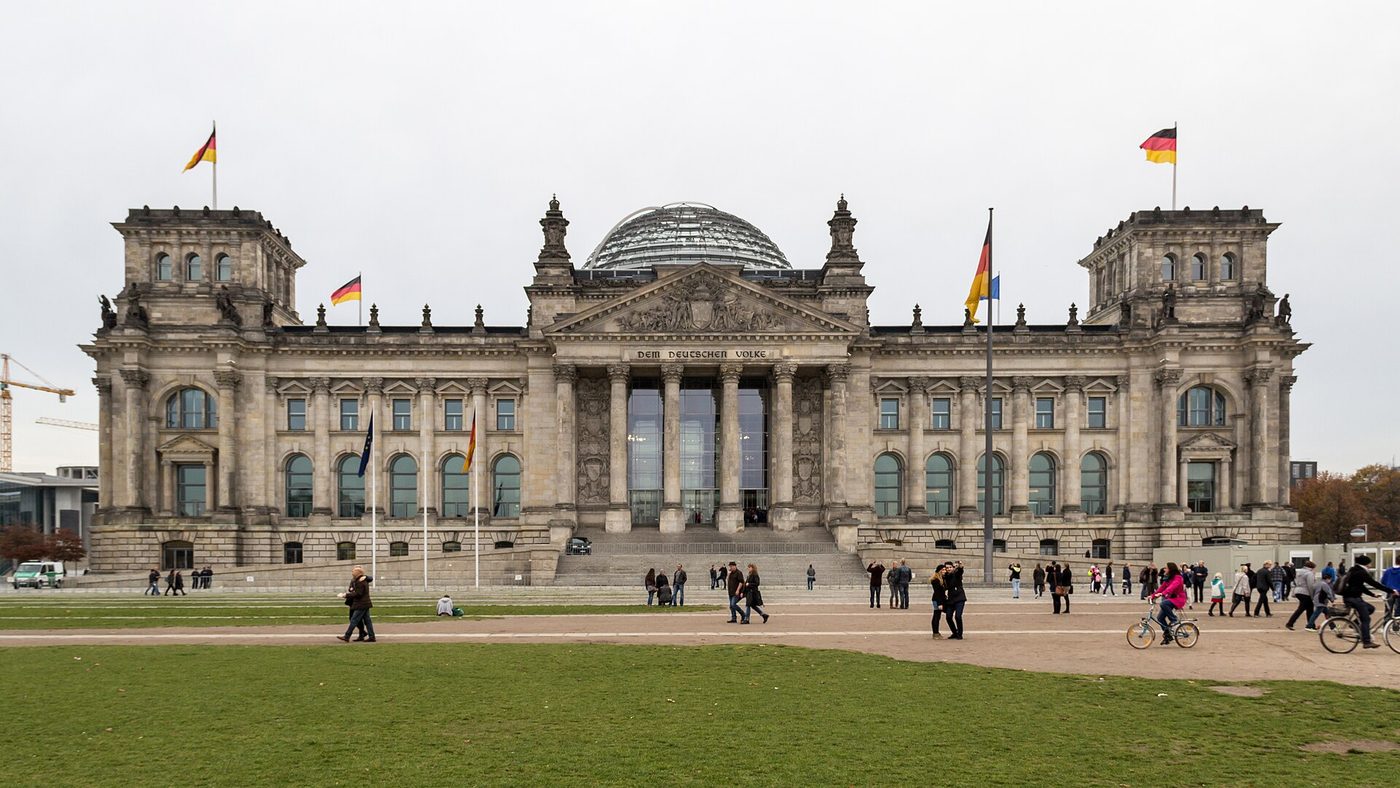
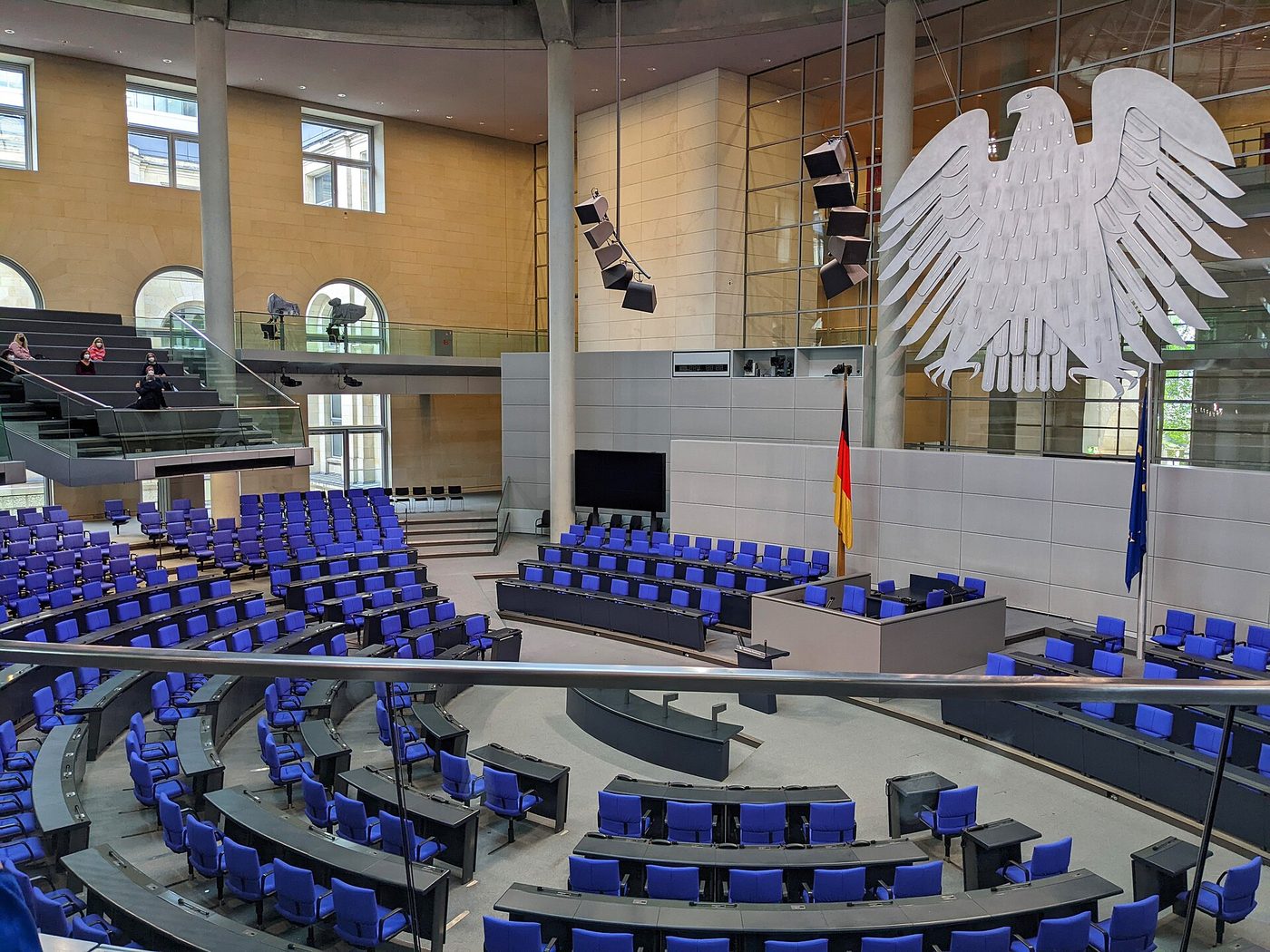
The Bundestag is the German parliament. It makes the federal laws, controls the government and elects the Chancellor. It meets in the Reichstag building in Berlin.
The members of the Bundestag (Abgeordnete) are elected for four years by the people. Everybody who is a German citizen and 18 years old or older can vote (aktives Wahlrecht).
The five principles of the elections: general (allgemein), direct (unmittelbar), free (frei), equal (gleich) and secret (geheim). Voting is a right, but it is not compulsory.
Each voter has two votes: the first vote (Erststimme) is for a candidate in the constituency, the second vote (Zweitstimme) is for a party list, and the second vote decides how strong each party is in the Bundestag.
A party needs at least five percent of the second votes (the “Fünf-Prozent-Hürde”), or three direct seats, to enter the Bundestag.
The Bundestag has 630 seats and is led by the President of the Bundestag (Bundestagspräsident). The party or the parties with the majority form the government; the other parties form the opposition.
Key words you will meet in the questions
der Bundestag
the federal parliament
die Wahl
election
die Abgeordnete / der Abgeordnete
member of parliament
die Opposition
the parties that are not in government
wahlberechtigt
entitled to vote
Part 3 of 5
The Chancellor, the government and the President
The Federal Chancellor leads the government. The Federal President is the head of state, with a mainly representative role.
The Bundestag elects the Federal Chancellor (Bundeskanzler or Bundeskanzlerin). The Chancellor decides the main lines of the policy (Richtlinienkompetenz) and chooses the federal ministers; together they are the Federal Government (Bundesregierung).
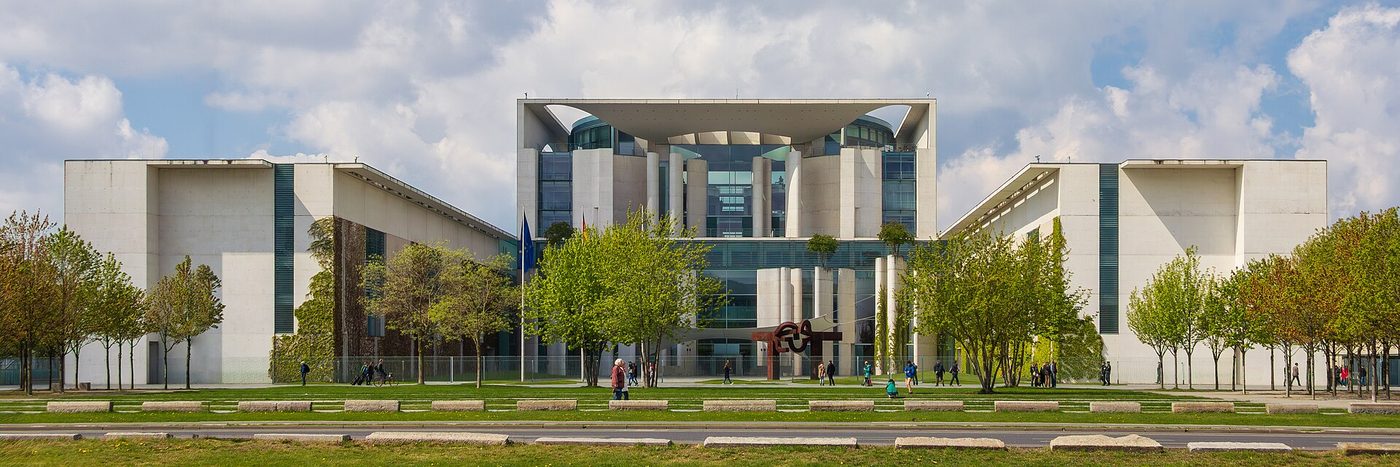
The Chancellor works in the Federal Chancellery (Bundeskanzleramt) in Berlin. Konrad Adenauer was the first Chancellor of the Federal Republic, from 1949.
The Bundestag can remove a Chancellor only by electing a new one with a majority (the “constructive vote of no confidence”, konstruktives Misstrauensvotum).
The Federal President (Bundespräsident) is elected for five years by the Federal Convention (Bundesversammlung), and can be elected a second time at most. He or she represents Germany, signs the laws and does not govern.
The seat of the President is Schloss Bellevue in Berlin. Berlin is the capital of Germany; the government moved from Bonn to Berlin in the 1990s.
Key words you will meet in the questions
der Bundeskanzler / die Bundeskanzlerin
the Federal Chancellor
die Bundesregierung
the federal government
der Bundespräsident
the Federal President
der Bundesminister
a federal minister
die Koalition
an alliance of parties that govern together
Part 4 of 5
Federalism and the Bundesrat
Germany is a federal state: power is shared between the Bund (the federation) and the 16 Länder (states).
The Bundesrat is the body in which the governments of the Länder take part in the federal legislation and administration. It meets in Berlin.
Laws that affect the Länder need the approval of the Bundesrat. Each Land has between three and six votes, depending on its population.
The Länder have their own parliament (Landtag) and their own government, and they are responsible for education, the police and culture. This is why the Bundesland-specific questions of the test exist.
Local government is organised in municipalities (Gemeinden), led by a mayor (Bürgermeister), and in districts (Landkreise).
Key words you will meet in the questions
der Bundesrat
the body of the Länder at federal level
das Bundesland
a federal state
der Landtag
the parliament of a Land
die Gemeinde
a municipality
föderal
federal
Part 5 of 5
Parties and political participation
Parties take part in forming the will of the people (Article 21), and everybody is free to found a party or to join one.
The big parties include the CDU/CSU, the SPD, the Greens (Bündnis 90/Die Grünen), the FDP, Die Linke and the AfD; the CSU is only active in Bavaria.
Most governments are coalitions of several parties, because it is rare that one party gets the majority alone.
Parties that fight against the free democratic basic order can be banned by the Federal Constitutional Court.
Besides voting, people take part in politics through associations, unions, citizens’ initiatives, petitions and demonstrations. The press is free and controls the government.
Key words you will meet in the questions
die Partei
a political party
die Fraktion
the group of a party in parliament
die Bürgerinitiative
a citizens’ initiative
die Demonstration
a demonstration
die Mehrheit
majority
Remember for the exam
Grundgesetz: 23 May 1949; Article 1 human dignity; Article 20 democratic and social federal state, power comes from the people.
Bundestag: four years, elected by the people (18+), two votes, 5% hurdle; it elects the Chancellor.
Federal President: head of state, five years, elected by the Bundesversammlung; Chancellor leads the government.
Bundesrat = the Länder at federal level; each Land has its own Landtag and government.
Now practise this topic
Reading is the first step. Questions show you what you already know.
Study the questions on this topic
Every question of the bank on this topic, with its answer. Check yourself and mark what you do not know yet.