The Einbürgerungstest has 33 questions: 30 are taken from the general catalogue of 300 questions, and 3 are about your own federal state. There are 10 questions for each of the 16 Länder in the official catalogue, so you must study the ones of the Land where you live.
This guide gives you the map of the Länder, tells what the Land questions are like and covers the geography and the national symbols that come up in the general questions.
Part 1 of 4
The 16 Bundesländer and their capitals
Germany has 16 federal states. Three of them are city-states: Berlin, Hamburg and Bremen.
The Länder and their capitals: Baden-Württemberg (Stuttgart), Bayern (München), Berlin, Brandenburg (Potsdam), Bremen, Hamburg, Hessen (Wiesbaden), Mecklenburg-Vorpommern (Schwerin), Niedersachsen (Hannover), Nordrhein-Westfalen (Düsseldorf), Rheinland-Pfalz (Mainz), Saarland (Saarbrücken), Sachsen (Dresden), Sachsen-Anhalt (Magdeburg), Schleswig-Holstein (Kiel) and Thüringen (Erfurt).
Bayern is the largest Land by area, Nordrhein-Westfalen has the most inhabitants, and Bremen is the smallest. Berlin is both a Land and the capital of Germany.
Each Land has its own constitution, its own parliament (Landtag) and its own government; the head of the government is the Ministerpräsident (in the city-states: the Regierender Bürgermeister of Berlin, the Erster Bürgermeister of Hamburg and the Bürgermeister of Bremen).
The Länder are responsible for education, the police, culture and a part of the administration. The Landtag is elected by the people of the Land, usually every five years.
Germany has about 84 million inhabitants, and it is the most populous country of the European Union.
Exam tip: City-states: Berlin, Hamburg, Bremen. Learn all 16 capitals; the Land questions often ask for one.
Key words you will meet in the questions
das Bundesland
a federal state
die Landeshauptstadt
the capital of a Land
der Ministerpräsident
the head of a Land government
der Landtag
the parliament of a Land
der Stadtstaat
a city-state
Part 2 of 4
Your own Land: the 3 questions of the test
In the Einbürgerungstest, 3 of the 33 questions are about the Land in which you take the test. The 10 official questions of each Land are in our learning mode.
Pick your Bundesland in the learning mode, and you see the 300 general questions and the 10 questions of your Land with the answers.
The Land questions ask for the basics: the Landtag and who elects it, the Land government and the Ministerpräsident, the Land capital, the Land coat of arms (Wappen), the neighbours of the Land and its history and its famous places.
You take the Land questions for the Land where you live, that is the Land of your office that is responsible for the naturalisation (the Einbürgerungsbehörde).
Read about your Land in the German culture guide and on the website of the Land, then learn its ten questions twice: they are the easiest points of the test.
Key words you will meet in the questions
das Wappen
a coat of arms
die Einbürgerungsbehörde
the naturalisation authority
der Wohnort
the place where you live
die Landesregierung
the government of a Land
der Nachbar
neighbour
Part 3 of 4
The map of Germany
Germany is in the centre of Europe, and it has the most neighbours of all the countries of the European Union.
Its nine neighbours are Denmark in the north, Poland and Czechia in the east, Austria and Switzerland in the south, and France, Luxembourg, Belgium and the Netherlands in the west.
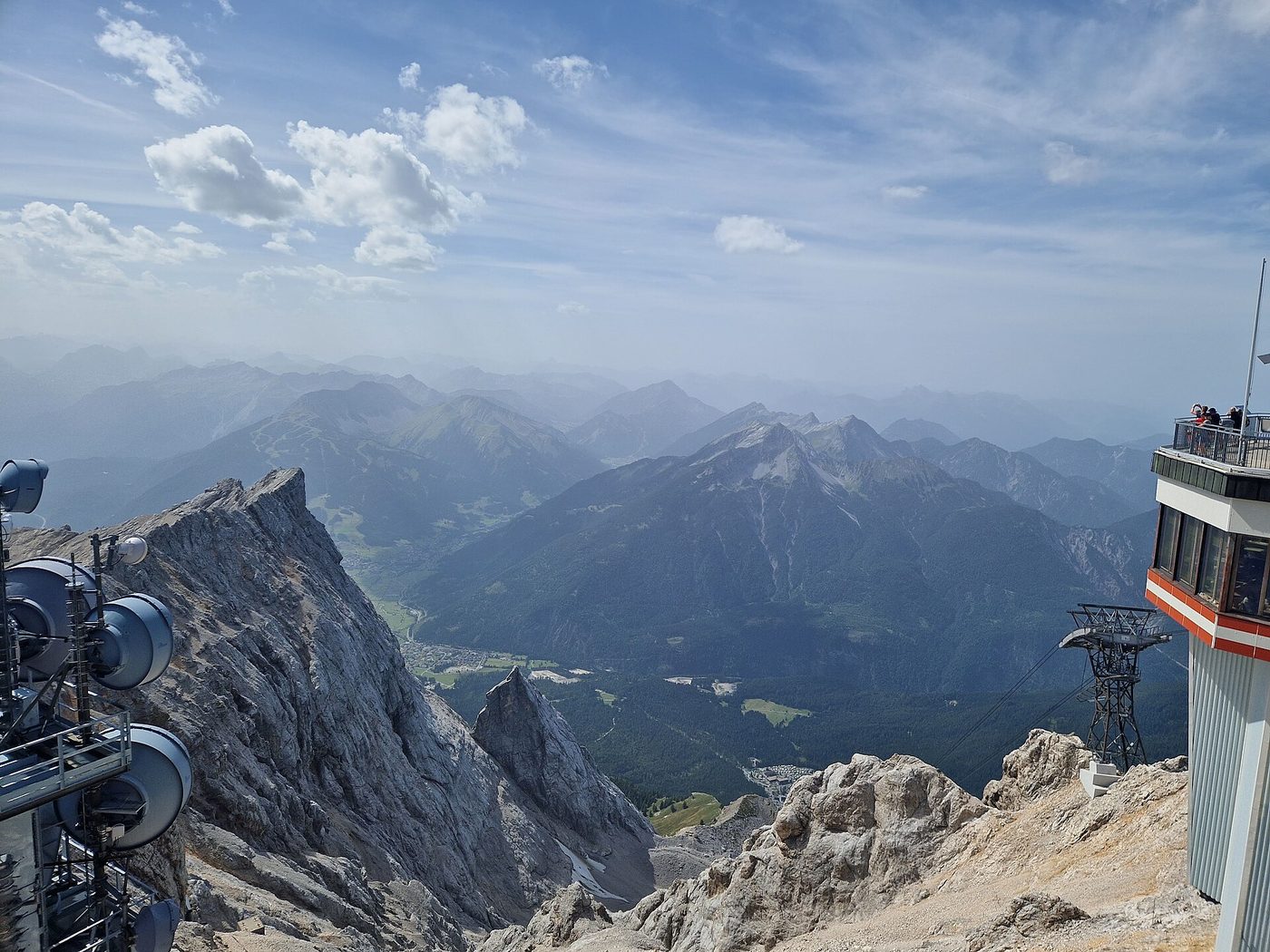
In the north there are the North Sea (Nordsee) and the Baltic Sea (Ostsee); in the south there are the Alps, and the highest mountain is the Zugspitze (2,962 m) in Bayern.
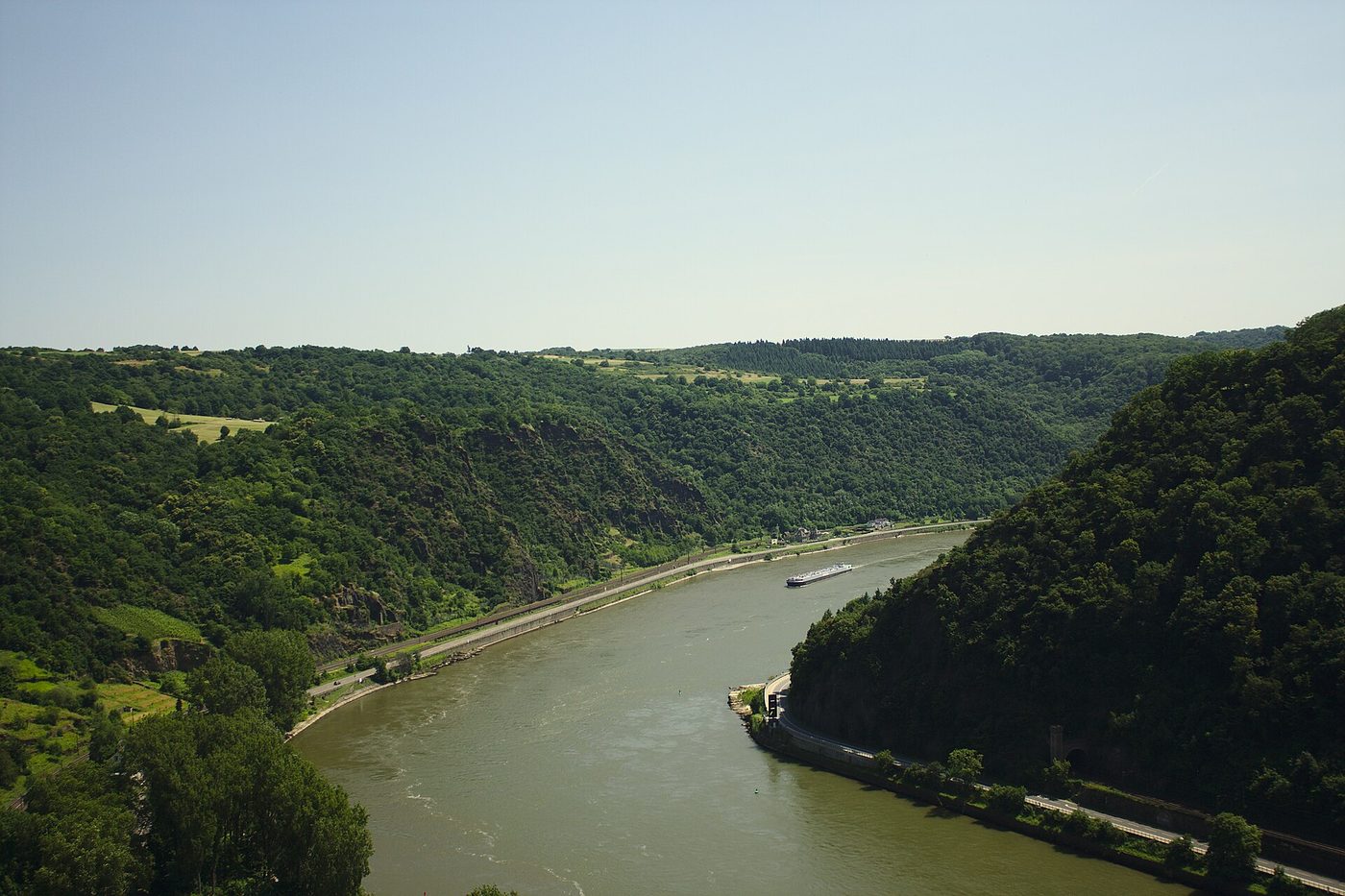
The main rivers are the Rhine (Rhein), the Elbe, the Danube (Donau), the Weser and the Main. The biggest lake is Lake Constance (Bodensee), on the border with Austria and Switzerland.
The biggest cities are Berlin, Hamburg, München and Köln. The Ruhr area in Nordrhein-Westfalen is a big industrial region, and Frankfurt is the financial centre.
Key words you will meet in the questions
der Nachbarstaat
a neighbouring country
die Nordsee / die Ostsee
the North Sea / the Baltic Sea
der Rhein
the Rhine
die Alpen
the Alps
die Zugspitze
the highest mountain in Germany
Part 4 of 4
The national symbols
The symbols of the Federal Republic are set in the Basic Law and in other laws.
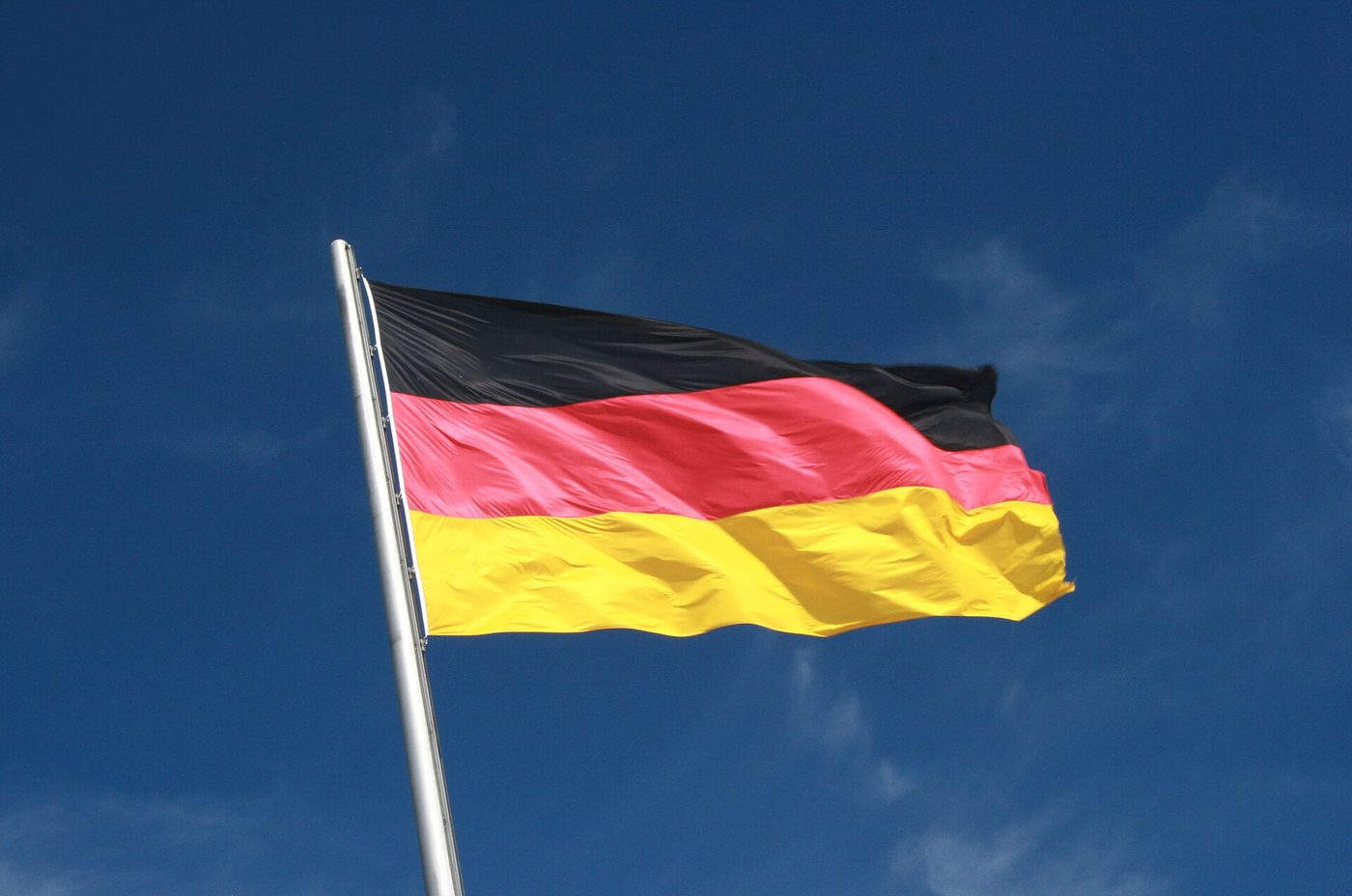
The federal flag is black, red and gold (Schwarz-Rot-Gold), in three horizontal stripes (Article 22 of the Basic Law). These colours are tied to the democratic movement of the 19th century.
The federal coat of arms shows a black eagle (Bundesadler) on a golden background. The same eagle is in the Bundestag.
The national anthem is the third verse of the “Lied der Deutschen”: “Einigkeit und Recht und Freiheit” (unity and justice and freedom).
The capital is Berlin; the national holiday is the Day of German Unity on 3 October; the currency is the euro; the national football team and the Bundesliga are well known.
Key words you will meet in the questions
die Bundesflagge
the federal flag
der Bundesadler
the federal eagle
die Nationalhymne
the national anthem
Schwarz-Rot-Gold
black-red-gold, the colours of the flag
die Hauptstadt
the capital city
Remember for the exam
16 Länder; city-states Berlin, Hamburg, Bremen; each has a Landtag and a government.
33 questions in the test: 30 general (from 300) and 3 about your Land (10 official for each Land).
Nine neighbours; Nordsee and Ostsee; Zugspitze 2,962 m; Rhein, Elbe, Donau.
Flag black-red-gold; Bundesadler; anthem “Einigkeit und Recht und Freiheit”; capital Berlin.
Now practise this topic
Reading is the first step. Questions show you what you already know.
Study the questions on this topic
Every question of the bank on this topic, with its answer. Check yourself and mark what you do not know yet.