Questions about work, money and social security are spread over the whole catalogue of the Einbürgerungstest, mainly in the areas “Leben in der Demokratie” and “Mensch und Gesellschaft”. They ask what the social state is, what rights employees have and which insurance pays what.
Part 1 of 4
The social market economy
Germany has a social market economy (Soziale Marktwirtschaft): a free market with competition, and a state that protects people who cannot help themselves.
Companies compete freely, prices are mostly set by supply and demand, and property is protected, but the state sets rules to protect workers, consumers and the environment.
The idea was developed after the Second World War by Ludwig Erhard and Alfred Müller-Armack. The strong growth of the 1950s and 1960s is called the “Wirtschaftswunder” (economic miracle).
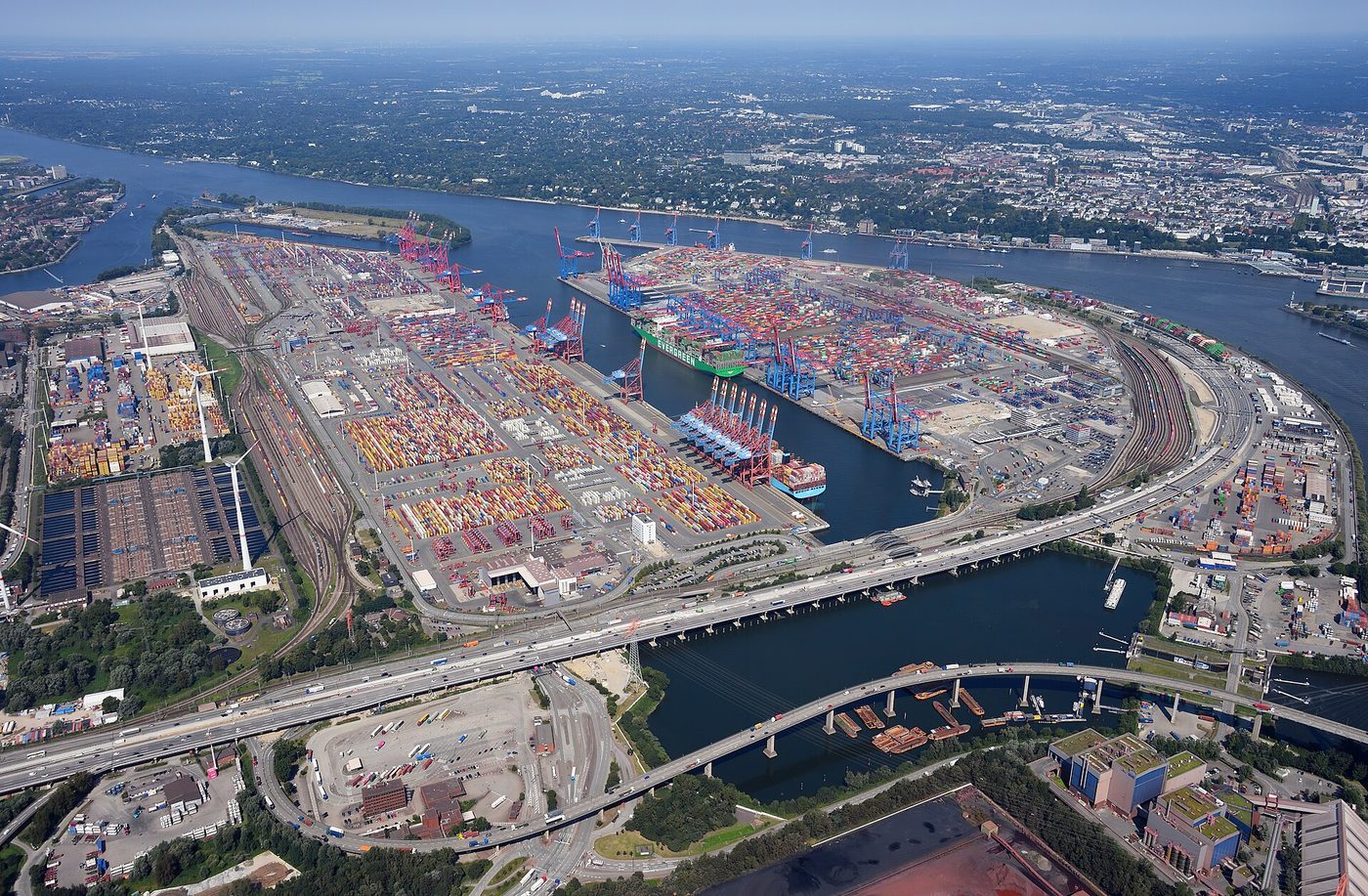
Germany is one of the biggest export countries. Typical industries are cars, machines and chemicals, and most companies are small and medium-sized (Mittelstand).
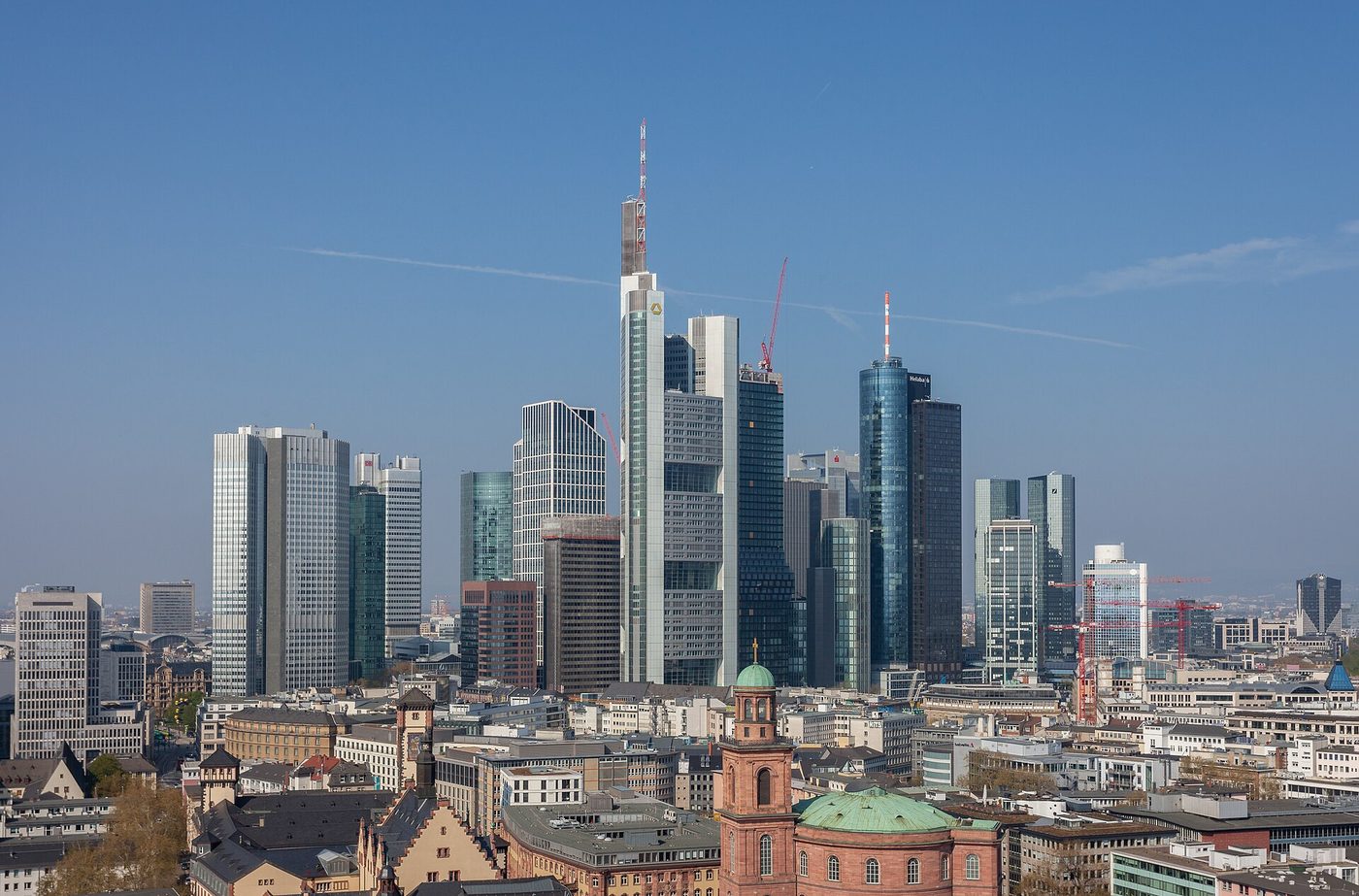
The currency is the euro (since 2002). The European Central Bank has its seat in Frankfurt am Main, the financial centre of Germany.
Key words you will meet in the questions
die Soziale Marktwirtschaft
the social market economy
das Wirtschaftswunder
the economic miracle after 1945
der Mittelstand
small and medium-sized companies
der Euro
the euro
der Export
export
Part 2 of 4
Your rights at work
Employees are protected by the law and by collective agreements. The test asks about the main rights.
A work contract (Arbeitsvertrag) says the work, the salary, the hours and the holidays. A statutory minimum wage (Mindestlohn) applies to nearly all employees; the amount is reviewed regularly.
Employees have a right to paid holidays: at least four weeks (24 working days with a six-day week) a year. The working time is normally not more than eight hours a day.
A dismissal needs a reason in companies where the protection against dismissal (Kündigungsschutz) applies, and has to be in writing, with a period of notice. Pregnant women are specially protected.
Workers can form and join trade unions (Gewerkschaften); unions and employers negotiate collective agreements (Tarifverträge). The right to strike exists. In a company, the works council (Betriebsrat) represents the employees.
The employment agency (Agentur für Arbeit) helps with the search for a job; the Jobcenter helps long-term unemployed people with basic income support (called the “Bürgergeld”; the name and the rules change).
Exam tip: A works council, a union and a collective agreement are three different things: company, workers’ organisation, agreement.
Key words you will meet in the questions
der Arbeitsvertrag
the work contract
der Mindestlohn
the minimum wage
die Gewerkschaft
a trade union
der Betriebsrat
the works council
die Kündigung
notice of dismissal
Part 3 of 4
The five social insurances
The social state is built on five compulsory insurances. Employees and employers pay contributions together, and the insurances pay in the event of illness, old age, unemployment, accident and need of care.
Health insurance (Krankenversicherung) is compulsory for everybody in Germany. It pays the doctor, the hospital and medicines. Most people are in a statutory health insurance fund (gesetzliche Krankenkasse) and have an insurance card.
Long-term care insurance (Pflegeversicherung) pays when people need care. Pension insurance (Rentenversicherung) pays a pension in old age; the retirement age is rising to 67.
Unemployment insurance (Arbeitslosenversicherung) pays unemployment benefit (Arbeitslosengeld) for a limited time. Accident insurance (Unfallversicherung) is paid by the employer and covers accidents at work and on the way to work.
The contributions are taken directly from the gross salary; the employer pays about half of them. Children, and the spouses without income, are often insured free of charge with the family.
For a medical emergency you call 112; for a doctor outside the surgery hours, the number 116 117 of the medical on-call service.
Key words you will meet in the questions
die Krankenversicherung
health insurance
die Rentenversicherung
pension insurance
die Arbeitslosenversicherung
unemployment insurance
die Pflegeversicherung
long-term care insurance
die Unfallversicherung
accident insurance
Part 4 of 4
Taxes and money
Taxes finance the state: schools, roads, the police and the social benefits.
Income tax (Einkommensteuer) is paid on income; for employees it is taken from the salary as wage tax (Lohnsteuer). Everybody has a tax identification number (Steuer-ID).
The value-added tax (Mehrwertsteuer) is included in the prices: 19 percent in general and 7 percent for food and books.
Most employees make a tax return (Steuererklärung) only if they want money back or if the law says so; the tax office is the Finanzamt.
You get a payslip (Gehaltsabrechnung) every month with the gross salary (Brutto), the taxes and contributions, and the net salary (Netto) that you receive.
Key words you will meet in the questions
die Steuer
tax
die Mehrwertsteuer
value-added tax
das Finanzamt
the tax office
brutto / netto
gross / net
die Gehaltsabrechnung
the payslip
Remember for the exam
Social market economy: free market plus the social state; the euro since 2002; the ECB is in Frankfurt.
At work: contract, minimum wage, at least four weeks of paid holiday, protection against dismissal, unions and works council.
Five social insurances: health, care, pension, unemployment, accident.
VAT 19% (7% for food and books); payslip with gross and net; the tax office is the Finanzamt.
Now practise this topic
Reading is the first step. Questions show you what you already know.
Study the questions on this topic
Every question of the bank on this topic, with its answer. Check yourself and mark what you do not know yet.