The examen civique starts from the values of the Republic. They are written in the Constitution, taught in every school and shown on every town hall, and the exam asks about them in two ways: as knowledge (“what does laïcité mean?”) and in situations (“what do you do when…?”).
Learn the ideas in plain words, with the French terms in the lists, because the questions use them.
Part 1 of 4
Liberty, Equality, Fraternity
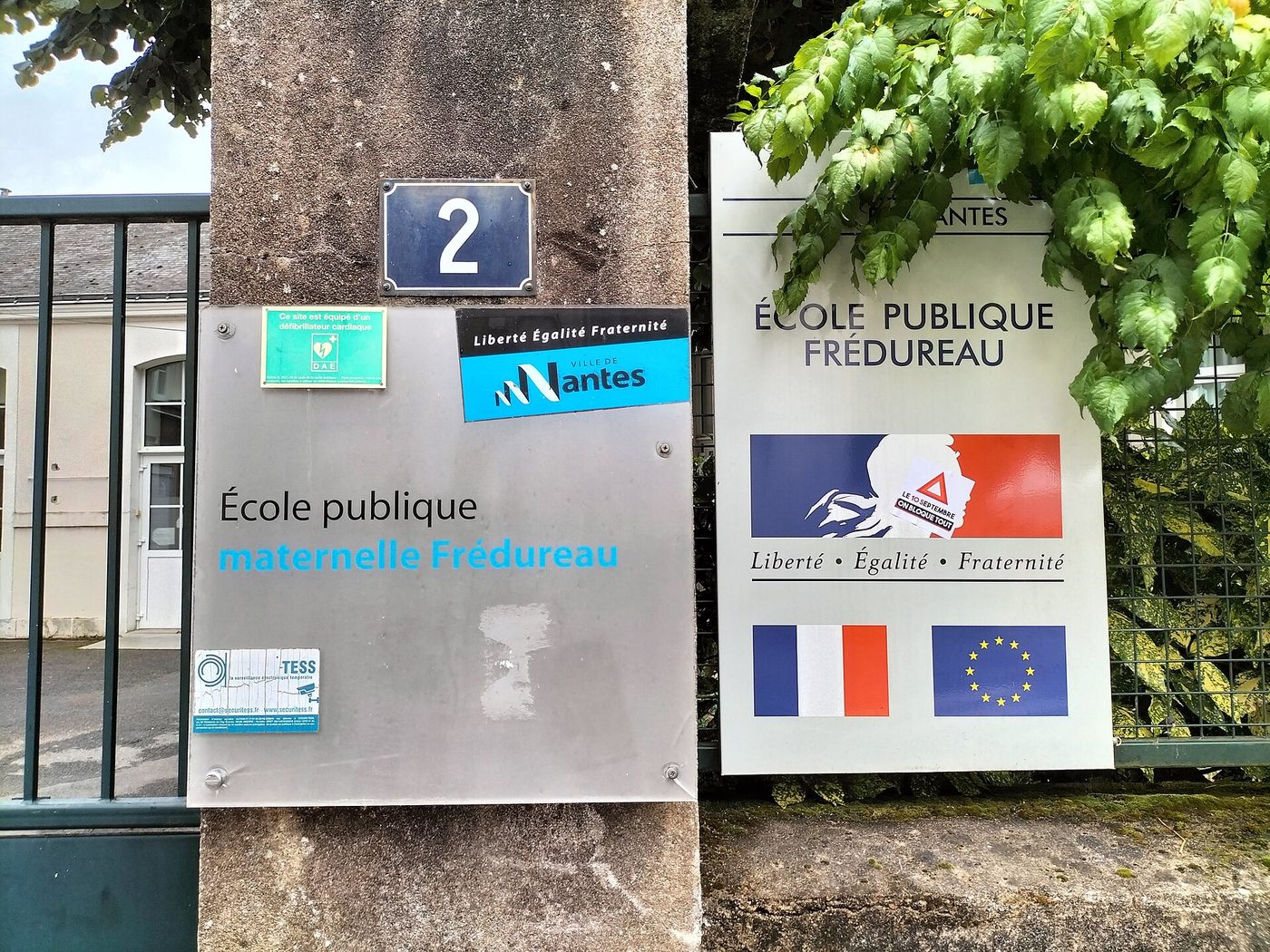
“Liberté, Égalité, Fraternité” is the motto of the French Republic. You see it on town halls, schools, coins and official papers.
Liberty (liberté): you are free to think, speak, believe, move and live as you wish, as long as you respect the law and the freedom of others.
Equality (égalité): everybody is equal before the law, with the same rights and duties, whatever their origin, sex, religion or situation.
Fraternity (fraternité): solidarity between people. It is why there is a social security system, public help for those in need and respect between citizens.
The motto comes from the Revolution of 1789 and appears in the Constitution of the Fifth Republic (1958), Article 2.
Article 1 says that France is an indivisible, secular, democratic and social Republic.
Exam tip: If a question asks what the motto is, the order is always Liberté, Égalité, Fraternité.
Key words you will meet in the questions
devise
motto
République indivisible
indivisible Republic (one and the same law for all)
solidarité
solidarity
Constitution
the Constitution
citoyen
citizen
Part 2 of 4
Laïcité: the secular State
Laïcité is one of the most important and most asked ideas. It means that the State is neutral about religion and that every person is free to believe or not to believe.
The law of 9 December 1905 separated the Churches and the State. The State does not pay for any religion and does not favour one.
Everybody is free to practise a religion, to change it or to have none, and to show it in private life and in public, within the limits of public order.
Public services are neutral: civil servants must not show their religion when they work, and the public schools are secular.
Since the law of 2004, pupils in public primary and secondary schools may not wear signs that clearly show a religion, such as a veil, a kippah or a large cross.
Adults who use a public service are free to wear religious signs, but they cannot hide their face in a public space (law of 2010).
Laïcité is not against religion: it protects the freedom of conscience and the equality of believers and non-believers.
Key words you will meet in the questions
laïcité
secularism, the neutrality of the State towards religion
liberté de conscience
freedom of conscience
neutralité
neutrality
culte
worship, a religion
signe religieux
religious sign
Part 3 of 4
The symbols of the Republic
The Republic has several official symbols. You should be able to recognise them and know what they stand for.
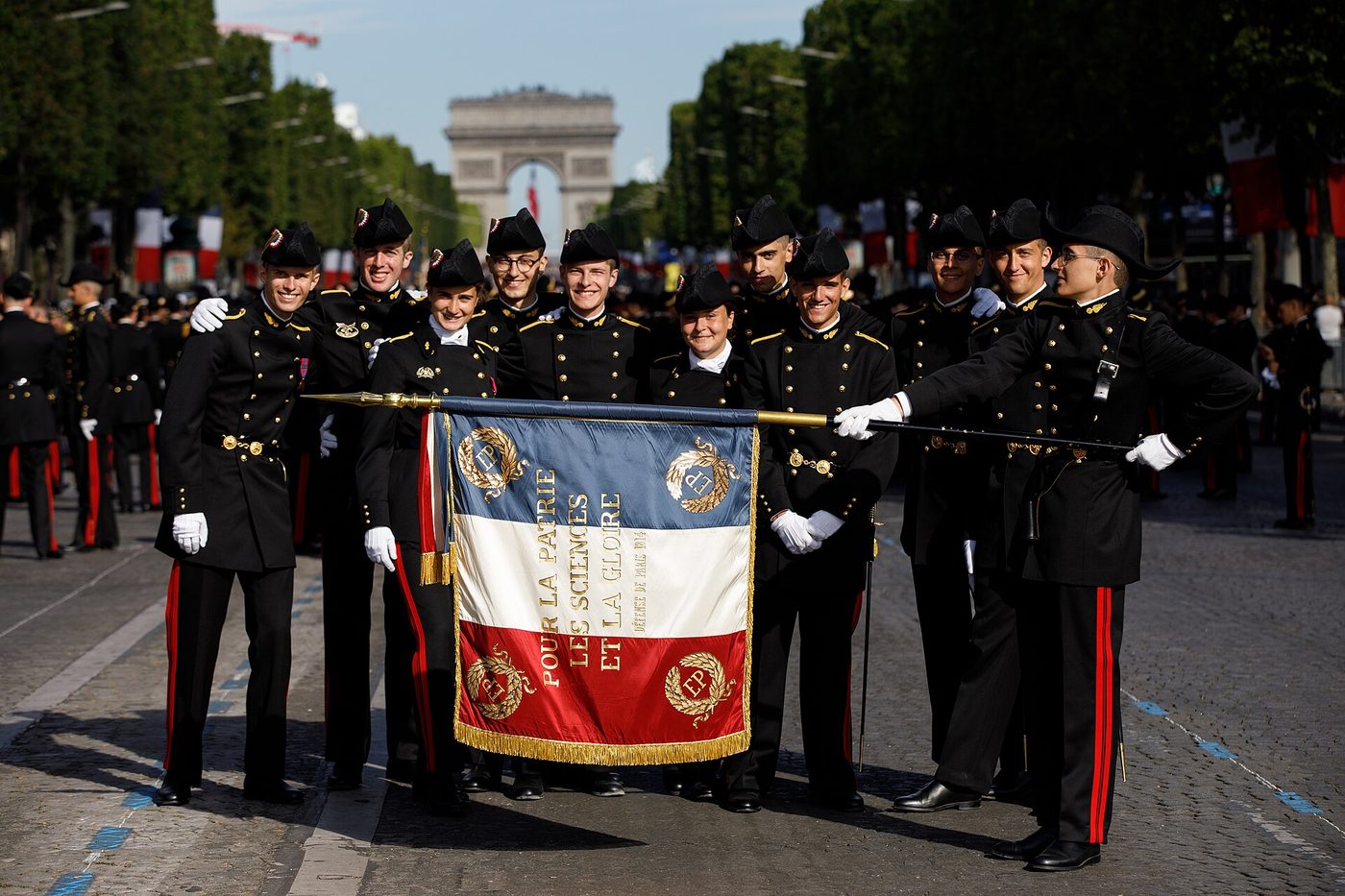
The flag is the tricolour: blue, white and red, in three vertical stripes, with the blue next to the pole.
The national anthem is “La Marseillaise”, written in 1792 and made the national anthem in 1795; it was confirmed in the Constitution.
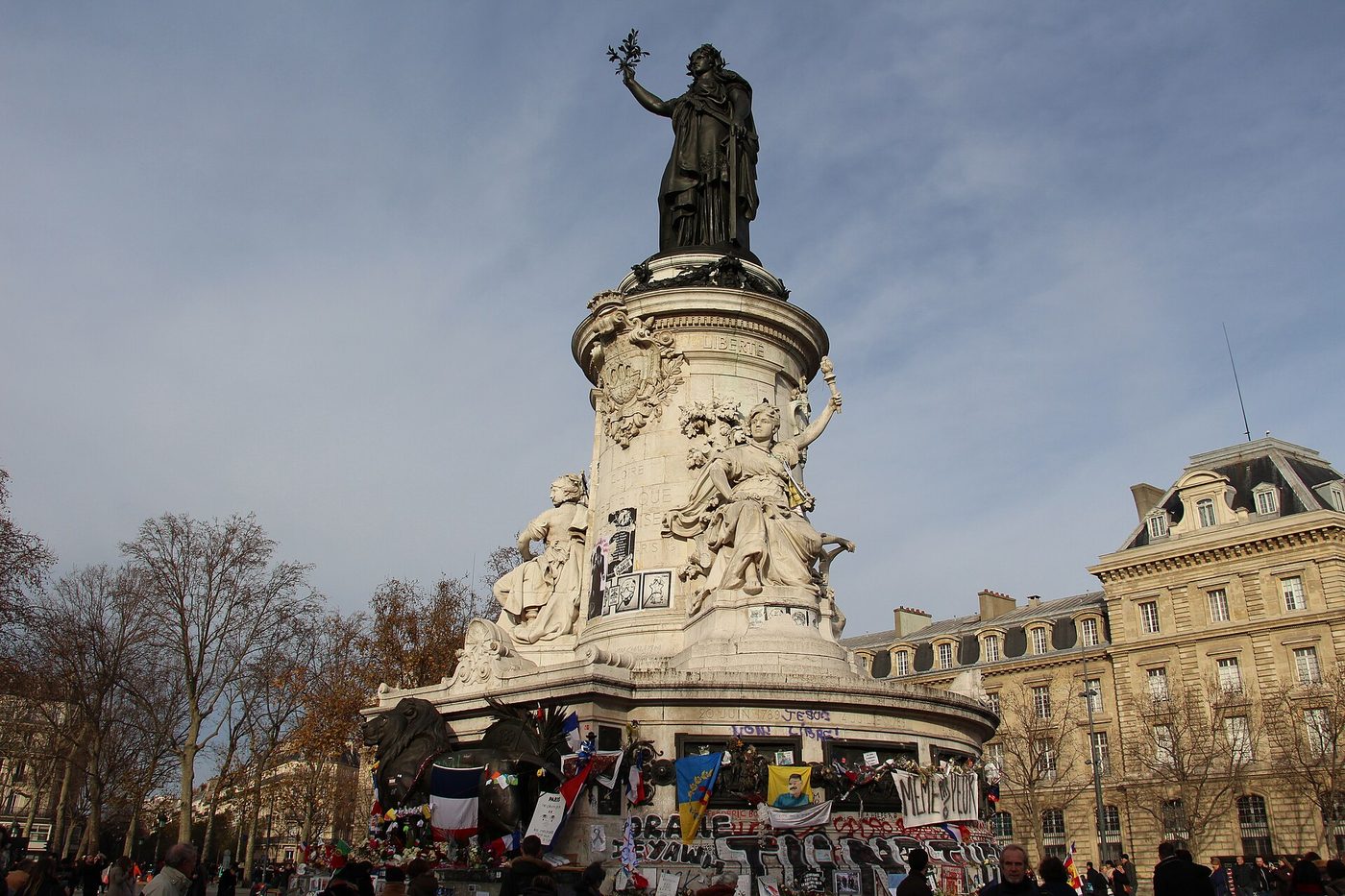
Marianne is the female figure that stands for the Republic. Her bust is in every town hall; her face has changed with the years.
The national day is 14 July. It remembers the storming of the Bastille in 1789 and the Fête de la Fédération of 1790. There is a parade on the Champs-Élysées.
The language of the Republic is French (Article 2 of the Constitution). The capital is Paris. The Republic is also symbolised by the Gallic rooster and the seal of the Republic.
Exam tip: Remember: 14 July, La Marseillaise, blue-white-red, Marianne.
Key words you will meet in the questions
drapeau tricolore
the tricolour flag
hymne national
national anthem
La Marseillaise
the French anthem
Marianne
the figure of the Republic
fête nationale
national day, 14 July
Part 4 of 4
Equality between women and men, and against discrimination
Equality is a value of the Republic and a question topic that comes up in every kind of situation: school, work, the family, the street.
Women and men have the same rights: to study, to work, to vote, to choose a partner, to own property and to be paid the same for the same work.
Women got the right to vote in France in 1944 (they voted for the first time in 1945).
Marriage needs the free consent of both spouses. A forced marriage is a crime, and so is violence in the couple or in the family.
Discrimination (treating somebody worse because of origin, sex, religion, disability, age, sexual orientation…) is forbidden and punished, for example in a job search, in housing or at the entrance of a place.
Racism, antisemitism and hatred are not opinions but offences. If you are a victim you can call 3919 (violence against women) or ask the Défenseur des droits.
Key words you will meet in the questions
égalité femmes-hommes
equality between women and men
discrimination
discrimination
mariage forcé
forced marriage
Défenseur des droits
the independent authority that defends rights
consentement
consent
Remember for the exam
Motto: Liberté, Égalité, Fraternité. France is an indivisible, secular, democratic and social Republic (Article 1).
Laïcité = neutrality of the State and freedom of conscience; the law of 1905 separated Churches and State.
Symbols: tricolour flag, La Marseillaise, Marianne, 14 July.
Women and men are equal; discrimination, forced marriage and violence are forbidden.
Now practise this topic
Reading is the first step. Questions show you what you already know.
Study the questions on this topic
Every question of the bank on this topic, with its answer. Check yourself and mark what you do not know yet.