The Netherlands is a constitutional monarchy and a parliamentary democracy. That means there is a king, but the king does not decide alone: the Constitution and the elected parliament set the rules. The exam asks who does what, how people can vote and how the country is divided.
Knowing the main institutions also helps in daily life: the municipality for your passport and registration, the police for safety, and the courts when a conflict cannot be solved otherwise.
Part 1 of 5
The king and the government
The head of state is the king, since 2013 King Willem-Alexander. Together with the ministers he forms the government. The ministers are responsible for what the government does, not the king.
The king signs laws and gives a speech each year on Prinsjesdag, the third Tuesday of September, in which the plans of the government for the coming year are announced.
The prime minister (minister-president) leads the cabinet (kabinet). The ministers lead the departments (ministeries) such as health, justice or education.
The government makes policy and prepares laws, and carries them out. It is controlled by parliament.
The king’s role is mostly ceremonial and symbolic; he is the head of state but not a politician with power to decide on policy. The Constitution can only be changed by parliament, with a special procedure.
Key words you will meet in the questions
koning / koningin
king / queen
minister-president
prime minister
kabinet
cabinet (the ministers)
regering
government
grondwet
Constitution
Part 2 of 5
Parliament: the House of Representatives and the Senate
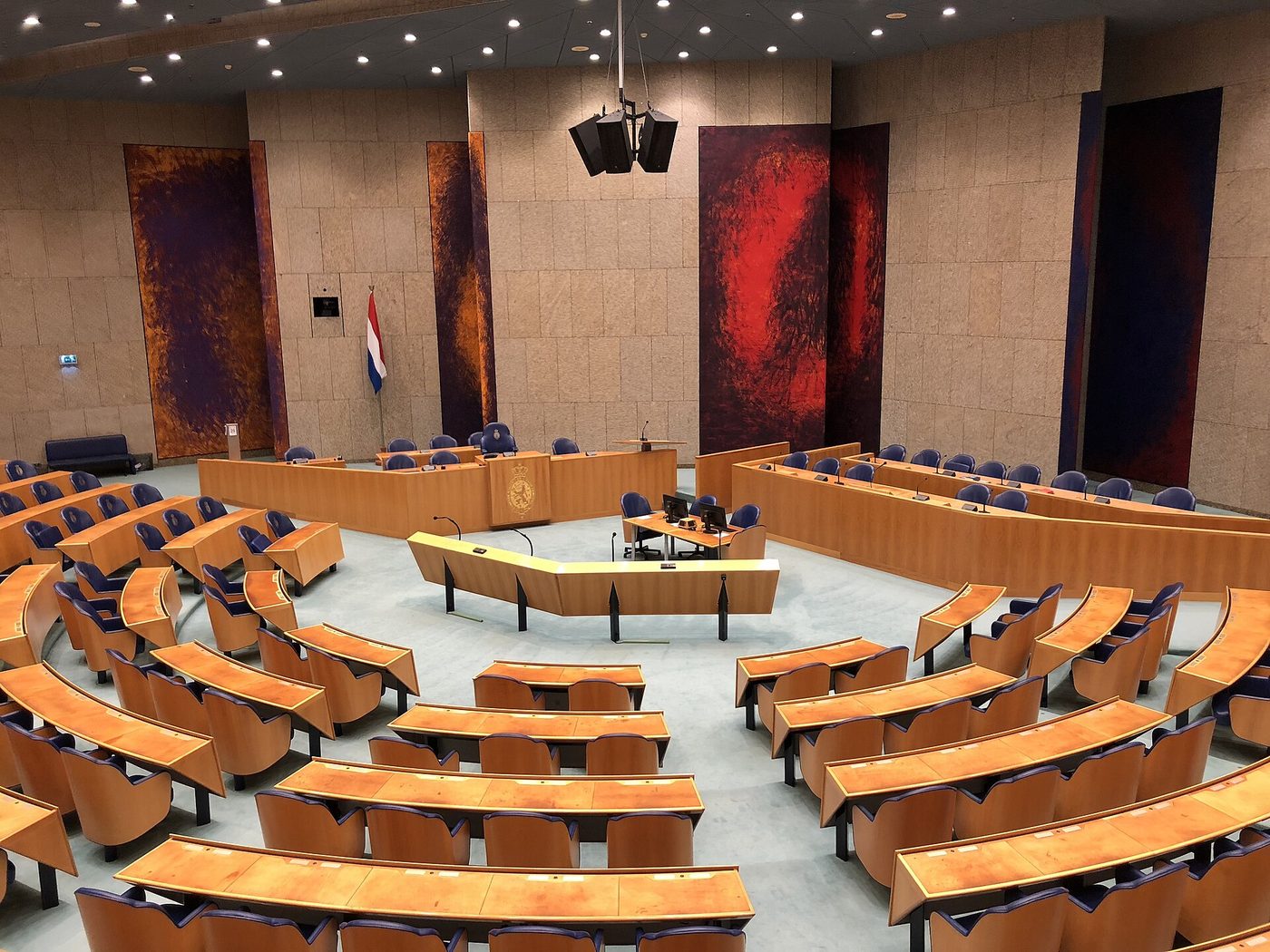
Parliament (Staten-Generaal) has two chambers. Both are in The Hague.
The House of Representatives (Tweede Kamer) has 150 members. It makes laws together with the government, can change them and checks the government. It is elected directly by the voters.
The Senate (Eerste Kamer) has 75 members. It checks the laws once more, but cannot change them. It is elected by the members of the provincial councils.
The Council of State (Raad van State) advises the government on new laws and is also the highest court in administrative cases.
Separation of powers (trias politica): the legislature (parliament and government make laws), the executive (government and civil service carry them out) and the judiciary (judges) are separate, so no one holds all the power.
Key words you will meet in the questions
Tweede Kamer
House of Representatives
Eerste Kamer
Senate
Kamerlid
member of parliament
wet
law
scheiding der machten
separation of powers
Part 3 of 5
Elections and voting
The Netherlands has free, secret and regular elections. Every voter has one vote, and there are many political parties.
Elections for the House of Representatives, the provincial councils, the municipal councils and the water boards are held every four years. European Parliament elections are held every five years.
Dutch citizens aged 18 and older can vote in all elections. People of other nationalities who live legally in the Netherlands can usually vote in municipal elections after five years (EU citizens already earlier).
The system is proportional: a party that gets 10 percent of the votes gets about 10 percent of the seats. Because there are many parties, no party gets a majority alone, so several parties form a coalition (coalitie) and agree on a coalition agreement (coalitieakkoord).
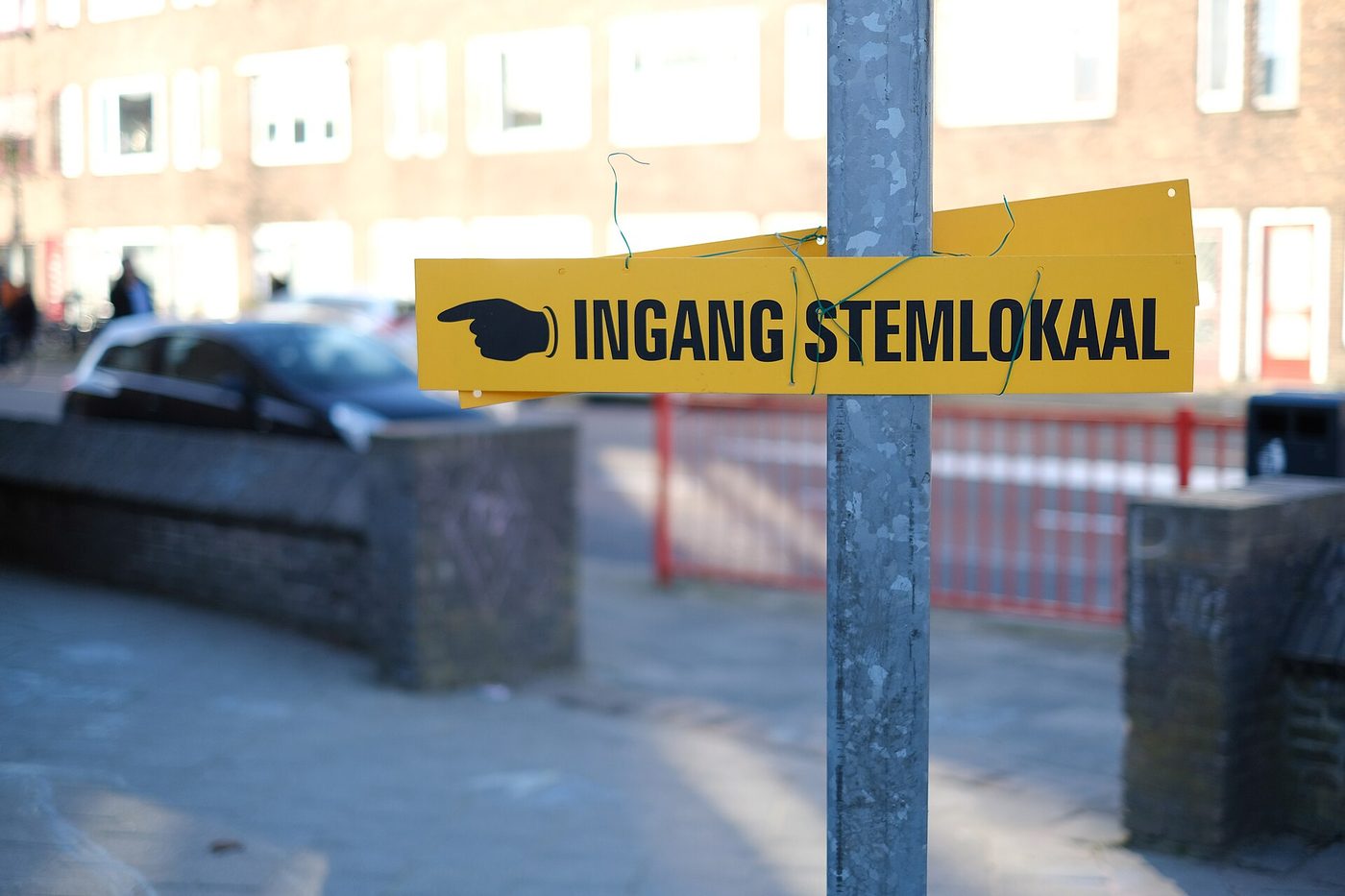
You receive a voting pass (stempas) by post. You vote at a polling station, in secret, so nobody may tell you who to vote for.
Voting is a right, not a duty. Many people also take part by joining a party, a trade union, a neighbourhood group or by contacting their municipality.
Exam tip: Remember: vote at 18, every four years for most elections, secret ballot, and a coalition of parties governs.
Key words you will meet in the questions
verkiezingen
elections
stemmen
to vote
kiesrecht
right to vote
coalitie
coalition government
stempas
voting pass
Part 4 of 5
Province, municipality and water board
The Netherlands is divided into three levels of government below the national one.
There are 12 provinces (provincies), each with a provincial council (Provinciale Staten) and a King’s Commissioner (commissaris van de Koning). They are responsible for things like regional roads, nature and spatial planning.
There are around 340 municipalities (gemeenten), each with a municipal council (gemeenteraad) elected by the residents, and a mayor (burgemeester) appointed by the Crown. They take care of your registration, passport, permits, local roads, waste, schools and social support.
Water boards (waterschappen) look after dikes, canals and the water level, and clean the water. They collect their own water board tax.
If you want a passport, a driving licence, a marriage licence or want to register, you go to the municipality.
Key words you will meet in the questions
provincie
province
gemeente
municipality
burgemeester
mayor
gemeenteraad
municipal council
waterschap
water board
Part 5 of 5
The police, the courts and your rights
The law applies to everyone, including the government. Judges are independent: nobody, not even a minister, may tell them how to decide.
The police (politie) keep order and help people. You can call 112 in an emergency, or 0900-8844 if it is not urgent. You can report a crime at the police station or online.
If you are arrested, you have the right to a lawyer (advocaat) and to remain silent. The police may only keep you for a limited time before a judge decides.
A case starts at the court (rechtbank). You can appeal to the court of appeal (gerechtshof) and finally to the Supreme Court (Hoge Raad), which checks whether the law was applied correctly.
If you cannot afford a lawyer, you may get a lawyer paid or subsidised by the government (gesubsidieerde rechtsbijstand), depending on your income.
Fines (boetes) for breaking rules, such as cycling without lights or riding on a train without a ticket, are common and must be paid.
Key words you will meet in the questions
politie
police
rechter
judge
rechtbank
court
advocaat
lawyer
boete
fine
Remember for the exam
The Netherlands is a constitutional monarchy and a parliamentary democracy; the ministers are responsible, not the king.
Tweede Kamer (150) makes laws and checks the government; Eerste Kamer (75) reviews the laws.
You can vote from 18, elections are held every four years, the vote is secret, and a coalition of several parties governs.
12 provinces, municipalities (mayor, municipal council) and water boards; you go to the municipality for passport and registration.
Judges are independent; if you are arrested you have the right to a lawyer and to remain silent.
Now practise this topic
Reading is the first step. Questions show you what you already know.
Study the questions on this topic
Every question of the bank on this topic, with its answer. Check yourself and mark what you do not know yet.