In the 1800s the United States grew from thirteen states on the Atlantic coast to a country that reached the Pacific, and it fought its bloodiest war over slavery. The questions in this part ask for the main events, the people and the years.
Part 1 of 3
Expansion to the west
The country grew very quickly in the first half of the century, by purchase, by treaty and by war.
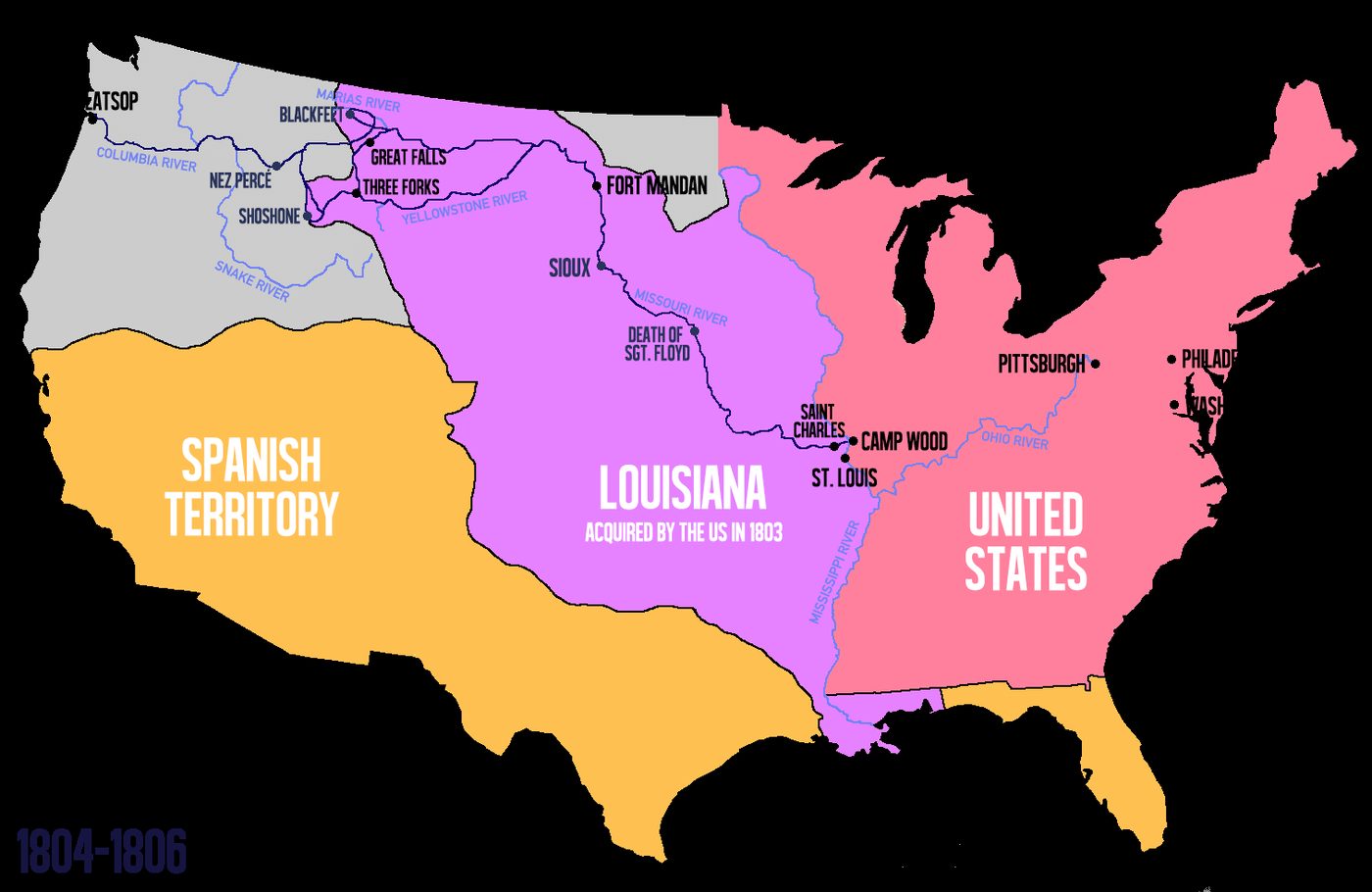
In 1803 President Thomas Jefferson bought the Louisiana Territory from France, the Louisiana Purchase, which doubled the size of the country.
Lewis and Clark explored the new territory from 1804 to 1806, helped by Sacagawea, a Native American woman.
The War of 1812 was fought against Great Britain, and during it Francis Scott Key wrote the words of “The Star-Spangled Banner”. The Mexican–American War (1846–1848) gave the United States California and much of the South-West.
Many people moved west, and the Native Americans were forced from their lands; the Trail of Tears (1830s) was the forced march of the Cherokee. The gold rush of 1849 brought people to California.
Railroads, telegraph and new factories connected and changed the country. The first transcontinental railroad was finished in 1869.
Key words you will meet in the questions
Louisiana Purchase
the 1803 purchase from France
expansion
growth in territory
Trail of Tears
the forced removal of the Cherokee
railroad
a track for trains
territory
land under U.S. control
Part 2 of 3
Slavery and the Civil War
The Civil War (1861–1865) was fought between the Northern states (the Union) and the Southern states (the Confederacy). It is the most asked event of the century.
The main causes were slavery, economic reasons and states’ rights, that is, the question of how much power the states had.
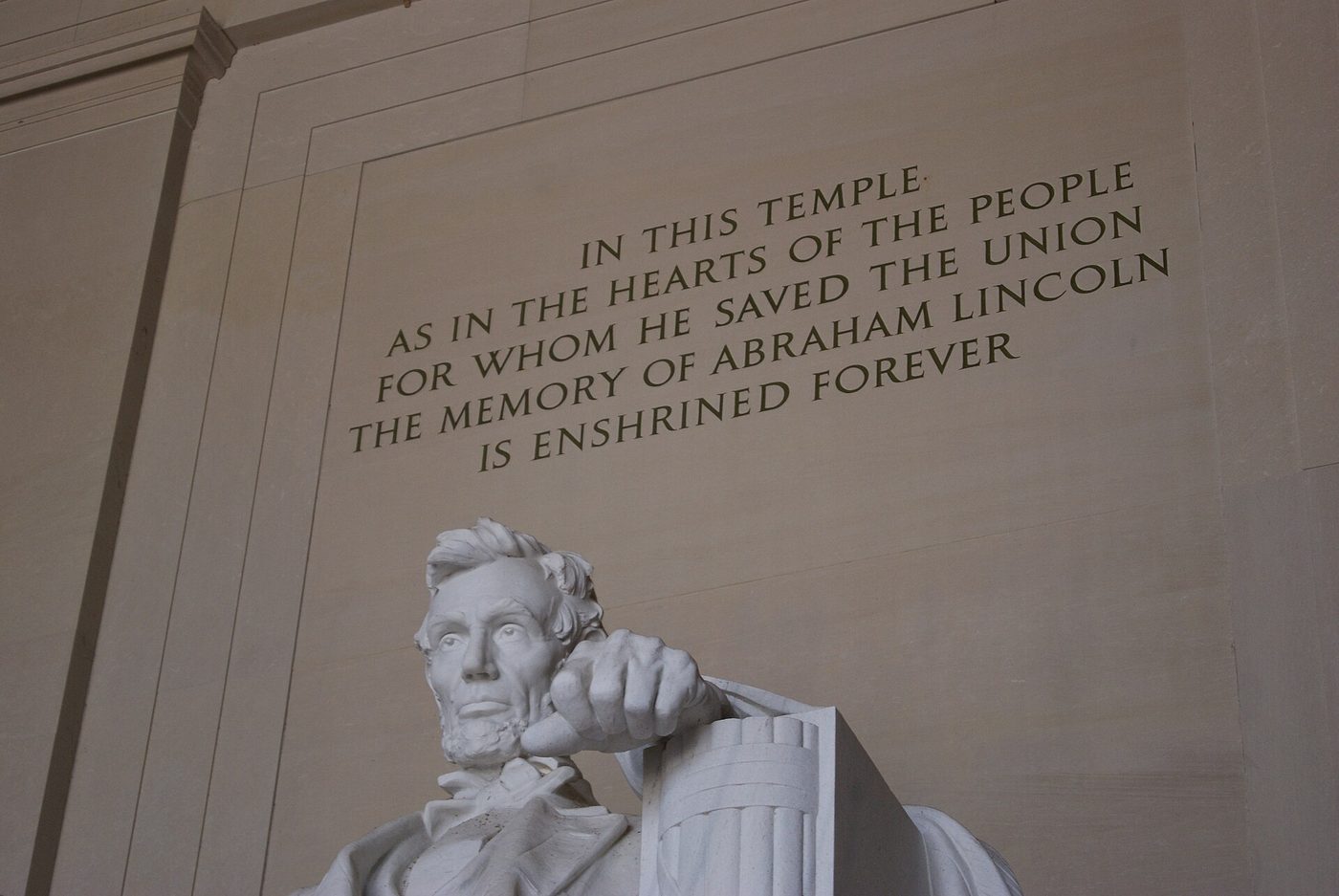
Abraham Lincoln was the president during the Civil War. He was elected in 1860, and the Southern states left the Union after his election.
The Emancipation Proclamation (1863) freed the enslaved people in the Confederate states. The 13th Amendment (1865) ended slavery in the whole country.
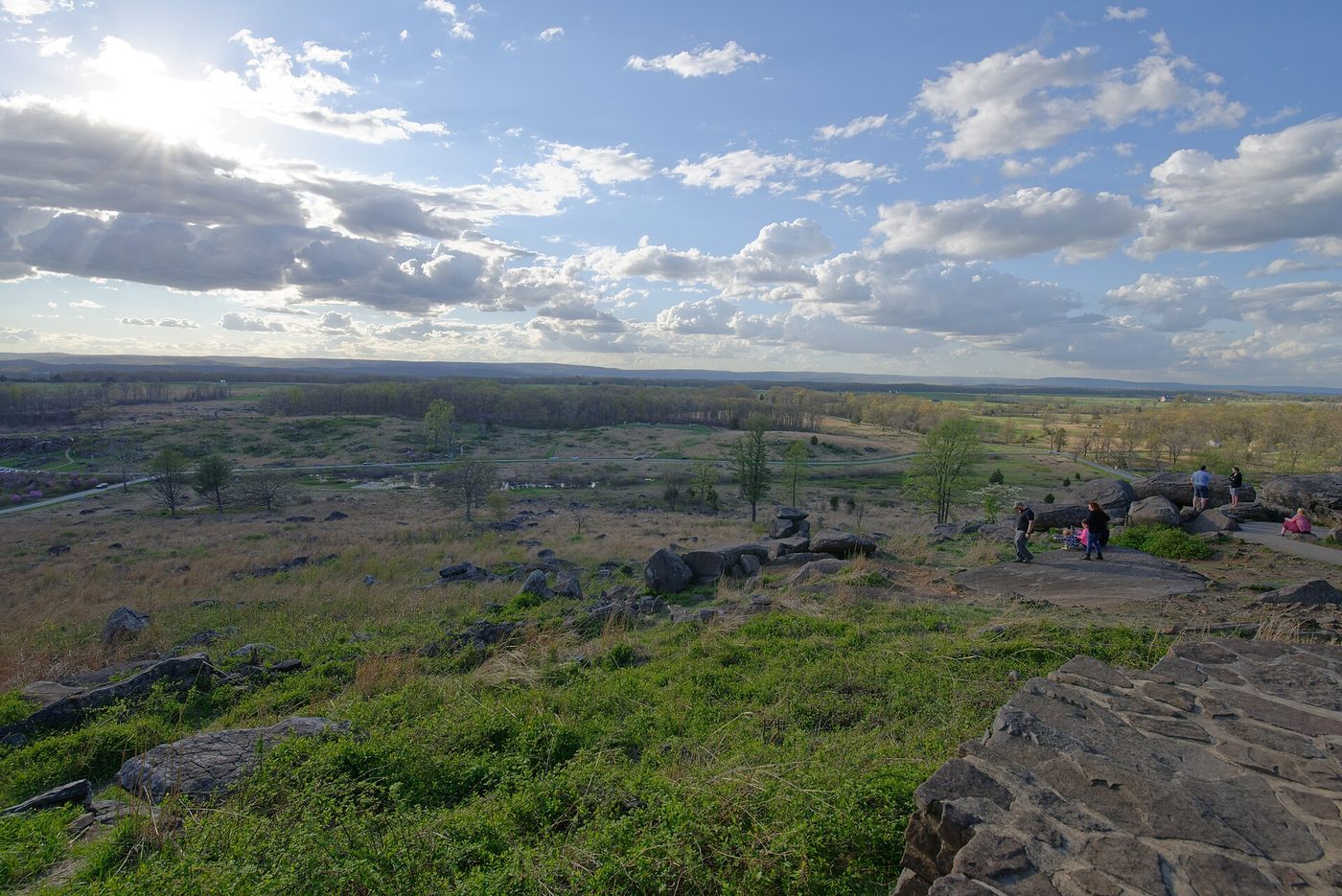
Important battles include Gettysburg (1863). Ulysses S. Grant led the Union army, and Robert E. Lee led the Confederate army. Lee surrendered at Appomattox in April 1865, and Lincoln was shot a few days later.
After the war, Reconstruction tried to rebuild the South and to give rights to formerly enslaved people, with the 14th and 15th Amendments.
Lincoln’s 1863 order freeing slaves in rebel states
slavery
owning people
Part 3 of 3
Reform: abolition and women’s rights
Many Americans worked to end slavery and to win equal rights. Some of them are asked about in the test.
Frederick Douglass was an escaped slave who became a famous speaker and writer against slavery. Harriet Tubman helped many enslaved people escape on the Underground Railroad.
Susan B. Anthony fought for women’s rights and the right to vote. The Seneca Falls convention (1848) was the first women’s rights convention.
Women won the right to vote nationally in 1920, with the 19th Amendment.
The 14th Amendment (1868) gave citizenship to people born in the United States and guaranteed equal protection of the laws.
Key words you will meet in the questions
abolitionist
a person who wanted to end slavery
suffrage
the right to vote
Underground Railroad
a secret network helping people escape slavery
women’s rights
equal rights for women
equal protection
the same legal protection for everybody
Remember for the exam
1803 Louisiana Purchase from France (Jefferson); Lewis and Clark explored it.
War of 1812 against Britain; Star-Spangled Banner by Francis Scott Key; Mexican–American War 1846–1848.